U.S. federal investigators pursuing the notorious "ShinyHunters" cybercrime syndicate—which recently compromised high-profile government servers, including those of the FBI—have uncovered deep, illicit ties within the cybersecurity industry. According to sources close to the ongoing investigation, authorities have identified executives at two separate ransomware negotiation and incident response firms who maintained unusually close and cooperative relationships with the extortion group.
Among the most explosive discoveries in the federal probe, a U.S.-based executive allegedly assisted ShinyHunters in operating a dedicated pressure website designed to coerce corporate and institutional victims into paying multimillion-dollar ransoms. This development highlights an alarming intersection between cyber extortionists and the very commercial intermediaries hired to protect vulnerable organizations.
The ShinyHunters syndicate has claimed responsibility for dozens of major data breaches dating back to 2019. Originally operated by cybercriminals based in France, control of the brand shifted as successive members were arrested and imprisoned by international law enforcement. Leadership eventually fell to a young hacker from Amman, Jordan, known online as "Rey," who was identified by researchers last year and reportedly detained by Jordanian authorities in early October, subsequently cooperating with the FBI. According to federal estimates, ShinyHunters has successfully extorted more than $70 million from victims throughout the year.
The group drew unprecedented scrutiny in late September when it successfully breached the FBI recruitment website, fbijobs.gov. The hackers taunted federal law enforcement by threatening to publicly release sensitive personnel records, including medical and psychological evaluations, Social Security numbers, home addresses, and details regarding individual employee specializations and units.

The brazen attack on the FBI sparked an aggressive, accelerated response, leading federal agents to detain and question anyone who had communicated with Rey or associated suspects. This sweeping crackdown was catalyzed by the September 15 arrest of Dutch national Pepijn van der Stap, a convicted hacker and suspected senior member of ShinyHunters. Dutch police utilized flash-bang grenades to stun and apprehend Van der Stap while he remained logged into various online accounts, specifically targeting his Signal instant messaging application.
Access to Van der Stap’s Signal account yielded a wealth of real-time intelligence, including recent communications with prominent ransomware negotiators based in the United States and Canada. Sources indicate these chat logs were instrumental in uncovering a separate murder-for-hire plot targeting individuals abroad, with investigators finding indications that Van der Stap had issued orders for the attacks, though authorities emphasize there is no evidence the plots were ever executed.
The digital trail soon led to formal criminal charges. On October 9, federal authorities arrested Edward Dubrovsky, a 54-year-old Canadian cybersecurity executive, in connection with the ShinyHunters investigation. Dubrovsky, who recently authored a book on cyber extortion management that advised victims to consistently engage with hackers, faces federal charges of threatening to disclose stolen data and interfering with interstate commerce through extortion. Prosecutors have requested that Dubrovsky remain in custody pending trial, and court records concerning his case have been placed under seal.
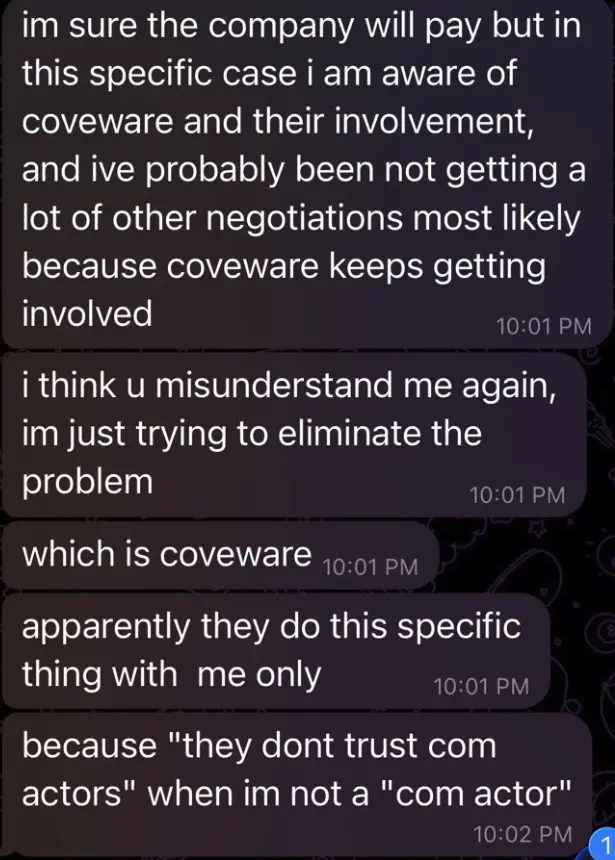
According to investigative sources, Van der Stap’s decrypted messages revealed that Dubrovsky and at least one executive at a major U.S.-based consulting firm maintained a steady dialogue with the hackers. Crucially, these executives frequently possessed intimate details regarding newly compromised ShinyHunters victims before the victim organizations themselves were even aware of the breaches. Furthermore, federal investigators discovered that Dubrovsky was aware that ShinyHunters had exfiltrated highly sensitive data from FBI servers long before the group publicly threatened to publish the personnel files on social media, yet he never alerted the bureau.
SHINYWIRE

As the probe widened, investigators discovered that at least one executive at a prominent U.S. consulting firm—employing more than 1,000 associates—played an active operational role in maintaining "shinywire[.]com," a now-defunct extortion portal utilized by ShinyHunters. Because formal charges have not yet been filed against this specific individual or firm, their identities are currently being withheld by reporting media.
The Shinywire platform operated from approximately May 3 until October 16, cataloging nearly 100 organizations breached by ShinyHunters. Each entry functioned as a direct coercion tool, urging victim entities to negotiate payment terms while displaying samples of stolen files and warning that total public exposure would follow non-compliance. Among the listed targets was Intuitive Surgical, an American medical technology company compromised in March through a targeted phishing attack that harvested employee credentials.
Under the mechanics of the scheme, if a victim organization refused to initiate discussions within seven days, the complete cache of stolen data was published on the core ShinyHunters shaming blog, accessible only via the Tor anonymity network.
Legal complications have further compounded the fallout from the investigation. In mid-October, court filings revealed that Dubrovsky had previously initiated a lawsuit in Ontario against Daniel Tobok, the former chief executive of Cypfer, a prominent Toronto-founded cybersecurity firm with international offices. Dubrovsky alleged he had become collateral damage in a campaign by Tobok to undermine his professional standing following a falling out between the former business partners. Tobok denied the allegations, filing a counterclaim accusing Dubrovsky of competing unfairly and misrepresenting his founding status within the firm.
GHOSTBYTE

Amid these corporate disputes, former colleagues of Daniel Tobok reported to investigators that he had long been associated with the online moniker "Ghostbyte" dating back roughly eight years. In 2018, a Canadian company targeted by the Dharma ransomware affiliate program was advised by its extortionists to contact an IT professional who could guarantee the safe return of locked data. The Dharma representative directed the victim to an email address linked to the handle "Ghostbyte" and hosted on Tutanota.
While it remains unconfirmed whether Tobok actively utilized the specific Ghostbyte address provided by the ransomware operators, intelligence tracking services indicate that an email address frequently used by Tobok shares associations with online accounts utilizing the "ghostbyte" username. Cypfer has formally stated that its business operations do not involve facilitating ransomware payments, that it had no prior knowledge of Dubrovsky’s arrest, and that it is not the target of any law enforcement investigation. The company was recently acquired by the Apros Group, a holding company led by former FBI special agent Jason Hogg.
CONFLICTING INTERESTS
The legal landscape surrounding ransom payments in the United States remains complex. While paying hackers for decryption keys or assurances of data deletion is not inherently illegal, payments made to groups designated as terrorist organizations or sanctioned entities by the U.S. Treasury Department carry severe criminal penalties. ShinyHunters currently lacks formal designation on these sanctions lists.
Insurance providers frequently direct corporate victims toward specialized incident response firms. However, industry practices vary significantly; some forensic companies refuse to facilitate extortion payouts, leading distressed corporate clients to switch providers when they decide to pay.

This financial dynamic has drawn sharp criticism from industry leaders. Mark Camillo, chief executive of CyberAcuView, noted that incident response firms charging a percentage of the total ransom payment create an inherent conflict of interest. Such fee structures financially incentivize negotiators to encourage payouts and discourage aggressive counter-negotiations that might lower the ransom amount.
Federal prosecutors have increasingly targeted abusive negotiation practices. In October, the Department of Justice charged MonsterCloud CEO Zohar Pinhasi with wire fraud and conspiracy for allegedly billing customers millions for remediation while secretly paying ransomware groups behind the victims’ backs. Similarly, in July, Florida-based ransomware negotiator Angelo Martino was sentenced to 70 months in prison for conspiring with the BlackCat ransomware group to extract maximum payouts by leaking confidential client negotiation strategies.
As the federal investigation into ShinyHunters continues, the case underscores systemic vulnerabilities within the cyber incident response ecosystem, where the boundaries between defense, negotiation, and illicit collaboration have become dangerously blurred.