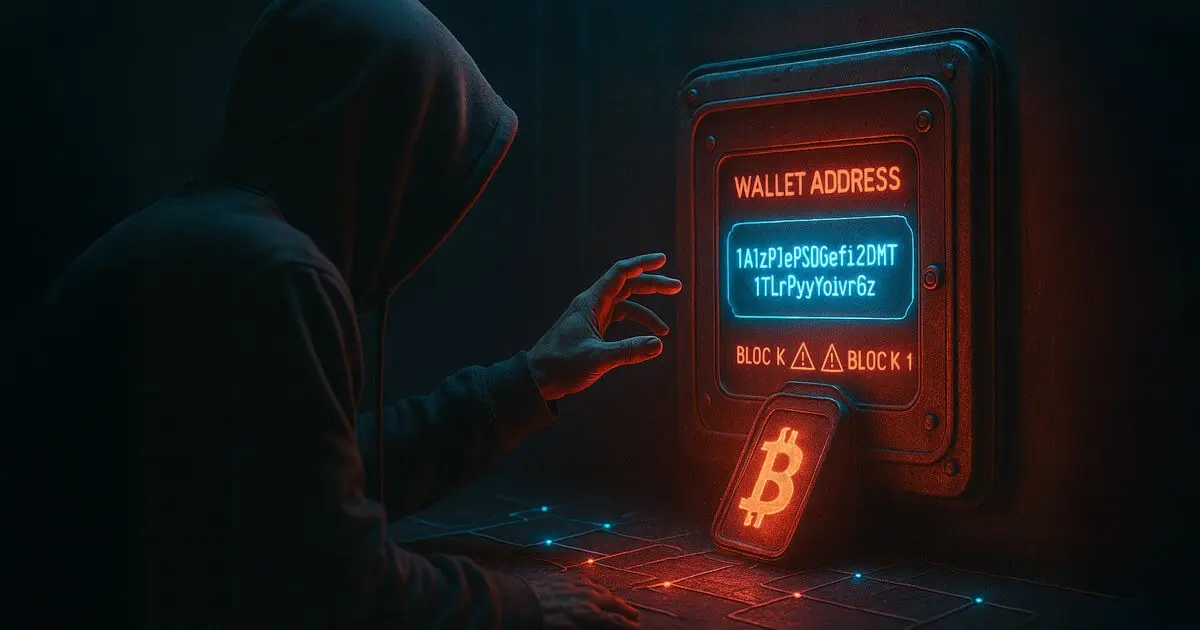
Analysts at BitMEX Research have raised a serious industry alarm regarding a sophisticated new scam campaign targeting early Bitcoin holders, specifically focusing on long-dormant cryptocurrency wallets dating back to the pioneering era of 2011.
According to the research firm’s findings, the perpetrators behind this scheme are exploiting dormant, high-value blockchain addresses by injecting deceptive transactions and misleading messages directly onto the ledger. This tactic relies on OP_Return outputs, which are optional fields within Bitcoin transactions capable of carrying arbitrary data. By utilizing this method, attackers can ensure that anyone monitoring or scanning these historical addresses encounters their fabricated narrative.
In one particularly glaring and well-documented case uncovered by analysts, the scammers set their sights on the notorious "1Feex" wallet. This prominent address currently holds approximately 80,000 Bitcoins, a massive stash widely believed to have originated from the historic Mt. Gox exchange theft. In this instance, the malicious actors crafted an elaborate on-chain message directing unsuspecting viewers to a fraudulent, newly minted website designed to impersonate the long-defunct Wall Street investment bank Salomon Brothers.
Upon visiting the fraudulent portal, targets are greeted by a forged legal notice stating that the specific Bitcoin wallet in question has been flagged as legally "lost or abandoned." The site then prompts the supposed rightful owners to step forward and prove their claim. To complete this so-called verification process, victims are instructed either to sign an on-chain message utilizing their private cryptographic keys or to submit sensitive personal and financial documentation through a web-based contact form. Adding a heavy sense of manufactured urgency, the fake notice explicitly warns that if no valid response or claim is registered by October 5, the wallet will officially be deemed legally abandoned by the entity.
Fake Legal Claims and Fabricated Corporate Ties
Following the discovery of the campaign, BitMEX investigators examined the claims made by the website and quickly determined that the digital platform bears no credible, legitimate link to the historical Salomon Brothers institution or its former executive leadership. While the fraudulent website attempts to lend an air of authenticity by displaying a list of real individuals who genuinely worked at Salomon Brothers back in the 1980s, none of these former professionals have any actual association with the spurious entity running the scam.

BitMEX Research highlighted these deceptive tactics, noting the uncanny resemblance between this current operation and previous controversial maneuvers. Observers noted that the approach mirrors earlier legal efforts and narratives associated with controversial figures such as Calvin Ayre, who previously funded legal actions concerning this exact same high-profile Bitcoin address.
In their public advisory, BitMEX Research stated that the connections claimed by the website are entirely fabricated. The firm pointed out that the advisory board page features real people from the 1980s investment banking era, yet these individuals operate completely independently and have no link whatsoever to the new fraudulent entity orchestrating the scheme.
As details of the campaign spread across digital asset forums, cryptocurrency community members weighed in with their own technical assessments. Security-conscious users quickly pointed out a glaring flaw in the scam’s premise: a legitimate wallet owner wishing to prove activity or ownership would simply need to sign a message or move a nominal, negligible amount of Bitcoin to demonstrate control, rather than transferring a full balance or exposing private keys to an unverified web form.
This glaring discrepancy has led security experts and community sleuths to suspect that the campaign is merely one piece of a much broader social engineering scam effort. The overarching objective appears to be harvesting sensitive personal information, credentials, or private keys under the guise of an official legal proceeding.
In light of these findings, BitMEX has strongly emphasized that users, particularly early adopters or those managing legacy addresses, should exercise extreme caution. Individuals must refrain from interacting with the suspicious contact forms, clicking unverified external links, or disclosing any personal or cryptographic details.
The sudden emergence of these tailored, legally themed cryptocurrency scams underscores the rapidly escalating complexity and resourcefulness of digital asset fraud. The broader threat landscape continues to expand as bad actors deploy increasingly psychological and institutional facades to trick unsuspecting participants. According to industry tracking data, the first half of 2025 alone witnessed hackers and cybercriminal syndicates steal over $2.1 billion across 75 separate security incidents, representing a troubling 10% rise in total stolen funds compared to the exact same period in the previous year. As social engineering tactics grow more refined, security researchers maintain that vigilance and independent verification remain the strongest defenses for long-term cryptocurrency holders.