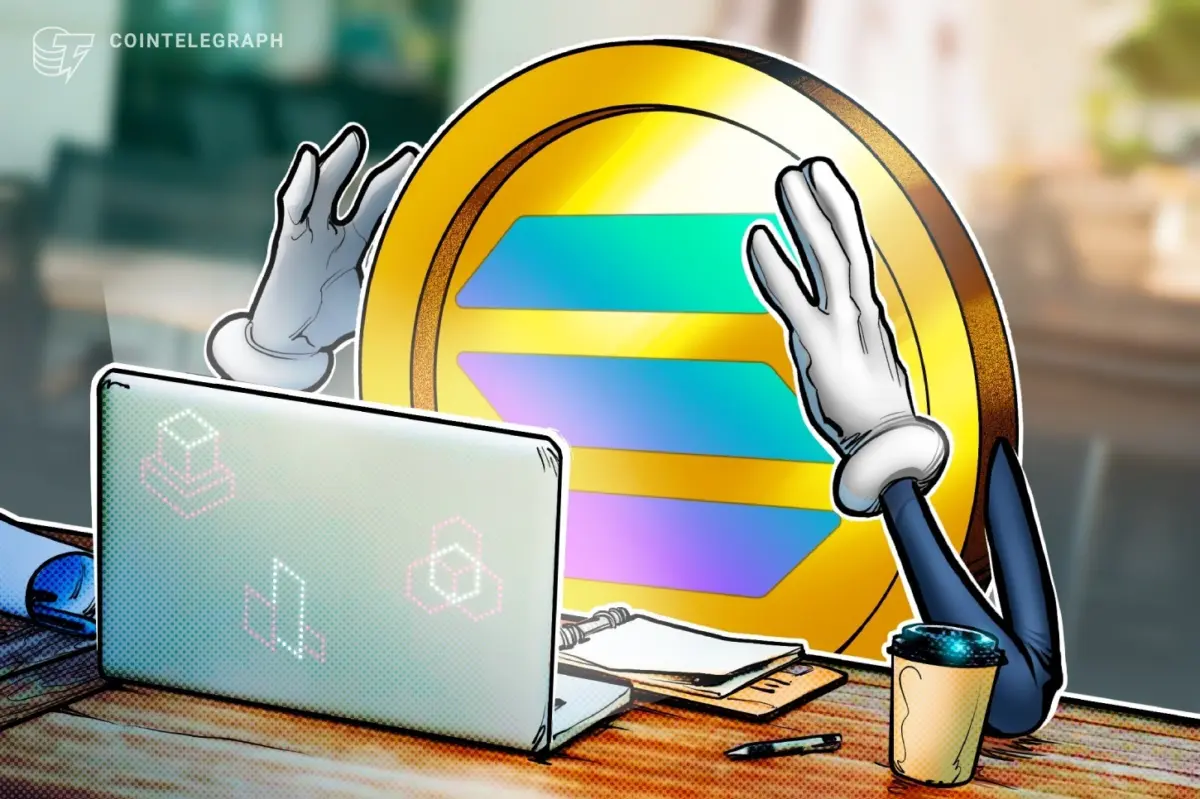
The count of independent validators operating on the Solana blockchain network has experienced a sharp and dramatic decline over the past three years, reigniting intense industry-wide debates regarding the long-term decentralization of the high-throughput layer-1 network. As structural operating expenses mount and aggressive fee competition squeezes profit margins, smaller independent operators are increasingly finding themselves priced out of the ecosystem.
According to data compiled by Solanacompass, the total number of active Solana validators plummeted by 68% down to just 795 operators as of Wednesday. This represents a staggering reduction from the network’s all-time peak of 2,560 active validator nodes recorded in March 2023. Within the architecture of proof-of-stake blockchains, validators serve an indispensable function. They are fundamentally responsible for adding new blocks to the ledger, proposing valid state transitions, and rigorously verifying transactions within proposed blocks, thereby playing a vital role in maintaining the security, integrity, and continuous operations of the decentralized ledger.
While industry observers note that a portion of historical node attrition typically reflects the routine pruning and purging of inactive, obsolete, or "zombie" nodes that have long ceased contributing to consensus, key stakeholders emphasize that current losses point to a much deeper systemic issue. Persistently increasing operational overhead and intense fee competition within the validator market are actively forcing smaller, independent operators offline.
An independent Solana validator operator who publishes commentary under the pseudonym Moo recently took to the social media platform X to voice these growing economic anxieties. Moo revealed that numerous small-scale validator groups are actively contemplating shutting down their infrastructure because the fundamental economics of running a node no longer make financial sense.
"Many small validators are actively considering shutting down (including us). Not due to lack of belief in Solana, but because the economics no longer work," Moo stated on X.

Elaborating on the core pressures facing independent nodes, Moo highlighted that large-scale institutional or enterprise-grade validators offering zero-percent commission fees are effectively undercutting the market, making it nearly impossible for smaller operations to remain profitable. This aggressive fee compression strips away the necessary revenue streams required to sustain ongoing technical operations, leaving boutique or community-led validators operating at a continuous loss.
"We started validating to support decentralization. But without economic viability, decentralization becomes charity," Moo added.
This troubling trend clearly signals that individual retail validators and small grassroots operators can no longer sustainably absorb the costs required to contribute to securing the network. Consequently, the trajectory indicates that Solana’s underlying node infrastructure will increasingly fall under the control of massive, well-capitalized operators. This inevitable consolidation among large players raises serious potential concerns regarding the network’s overall degree of decentralization, potentially exposing it to risks associated with heightened centralization of voting power and infrastructure dependency.
Solana’s Nakamoto Coefficient Sees 35% Decline
Compounding concerns regarding the shrinking validator count, Solana’s Nakamoto Coefficient has also suffered a significant downturn over the exact same timeframe. According to Solanacompass metrics, the network’s Nakamoto Coefficient decreased by 35%, falling from 31 in March 2023 down to 20 as of Wednesday.
Within the cryptocurrency and blockchain ecosystem, the Nakamoto Coefficient serves as a widely accepted metric for quantifying the degree of decentralization of a network. It is calculated by determining the absolute minimum number of independent entities—such as individual validators, mining pools, or institutional node runners—that would need to collude or be compromised in order to successfully disrupt network operations, censor transactions, or halt the blockchain entirely. The notable decline in Solana’s coefficient signals that the network’s heavily staked SOL supply is becoming progressively less distributed among independent parties, directly resulting in a less decentralized and potentially more vulnerable network topology.
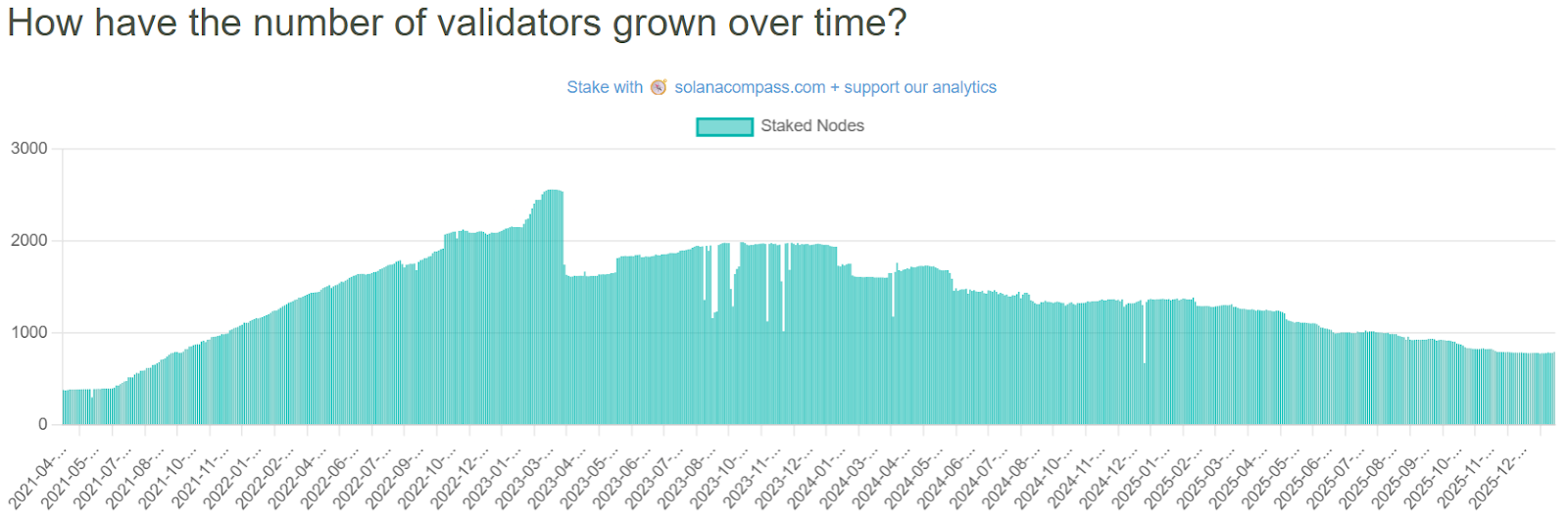
A primary driver behind this steady contraction in decentralization metrics is the surging cost associated with running a financially viable validator node. These operational expenses have escalated significantly over the past three years, moving in tandem with the broader appreciation and valuation shifts of the native Solana token.
Beyond baseline capital expenditures required for high-performance server hardware and enterprise-grade hosting services, prospective validators face steep recurring financial commitments. A node operator requires an initial minimum investment of at least $49,000 worth of SOL tokens staked just to clear the threshold for meaningful operational participation during the first year. Furthermore, ongoing protocol participation demands a continuous outlay of tokens purely for administrative functions.
Specifically, validators must commit at least 401 SOL each year strictly to cover voting fees to remain operationally active and synchronized with the network. Because validators are required to actively participate in the protocol’s consensus mechanism by casting a cryptographic vote transaction for every single block that the validator network agrees upon, these costs accumulate rapidly. Technical documentation provided by Solana validator Agave notes that continuous voting obligations can easily incur expenses amounting to as much as 1.1 SOL per day per validator.
As these mandatory baseline expenses continue to mount alongside competitive market pressures, the financial barrier to entry for securing the Solana network climbs higher, cementing an environment where only deeply capitalized entities can comfortably survive. Cointelegraph reached out directly to the Solana Foundation to seek official commentary and context regarding the declining validator counts and shifting economic dynamics, but had not received a formal response by the time of publication.