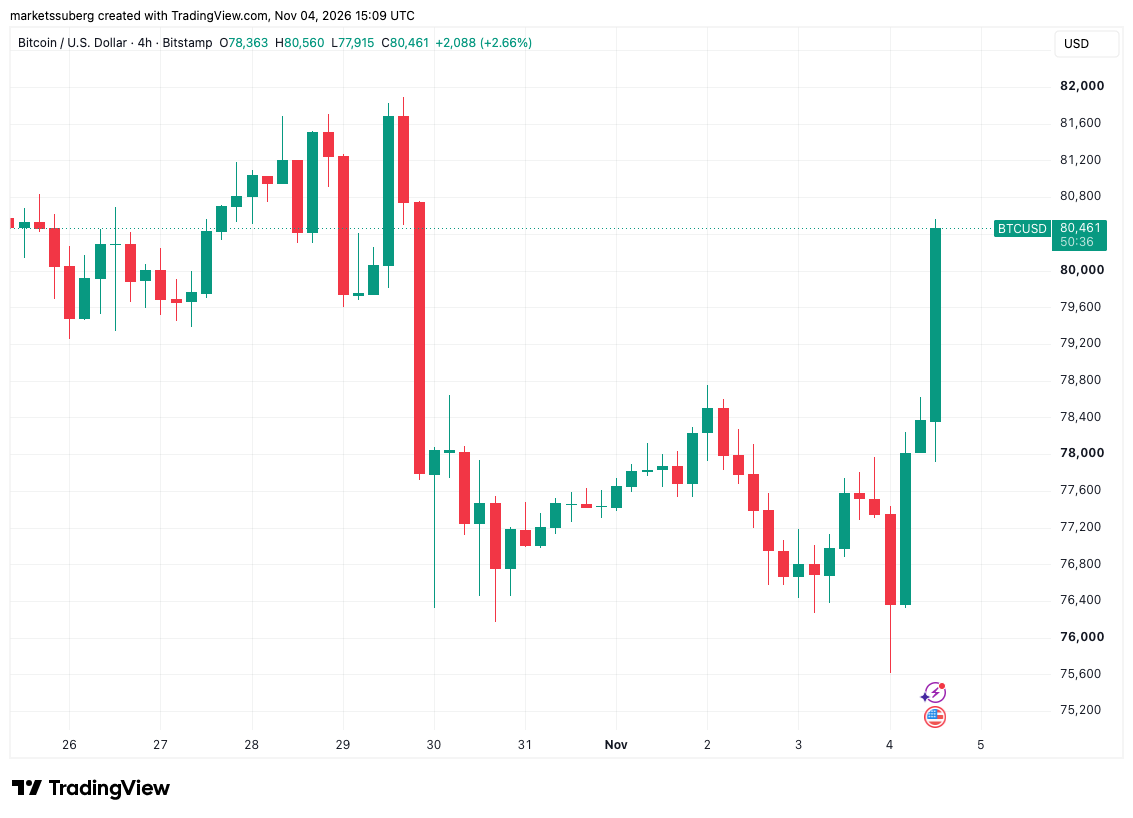
Bitcoin (BTC) made a decisive return to the $80,000 threshold at Wednesday’s Wall Street market open, mirroring a broader surge
across traditional financial markets as US stocks rebounded sharply following a Democratic sweep in the midterm elections.
According to data from TradingView, the BTC/USD trading pair registered an impressive gain of over 4%, successfully executing a robust recovery from its lowest price levels seen in seven weeks. The cryptocurrency’s sudden upward momentum came as political uncertainty cleared, paving the way for what market analysts have begun characterizing as a potential broader relief rally across both digital assets and traditional equities.
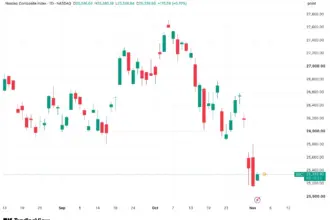
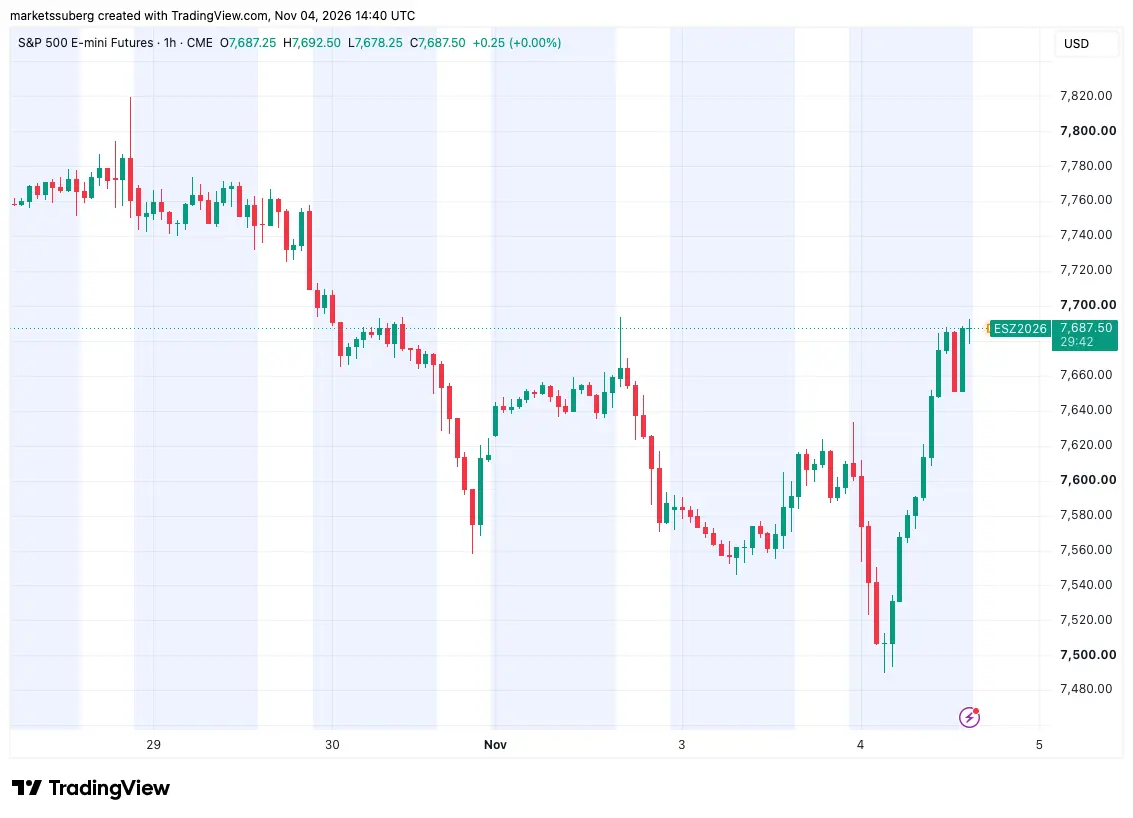
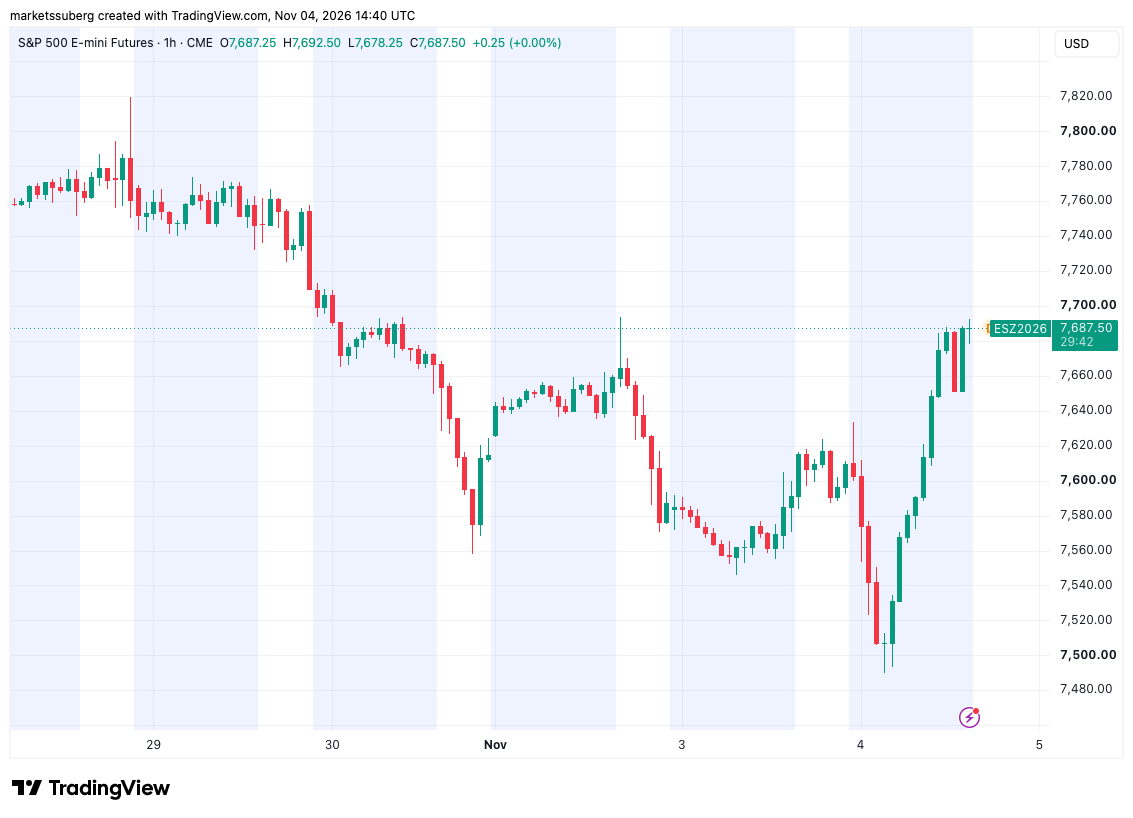
The financial landscape experienced significant turbulence overnight before staging a dramatic turnaround. US stock futures initially suffered heavy losses during the overnight session, with S&P 500 futures plummeting as low as 7,490 points—marking their weakest performance since July 31. However, as the morning trading session approached, sentiment rapidly reversed. S&P 500 futures climbed back to reach 7,690 points, bringing the benchmark index within striking distance of new month-to-date highs and signaling a powerful recovery in risk-on investor appetite.

Market observers were quick to contextualize the volatile price action. In its latest analytical breakdown shared on social media platform X, prominent trading resource The Kobeissi Letter characterized the initial equities downturn—which had briefly accompanied early news reports of Democratic gains—as a "textbook bear trap."
The commentary went on to emphasize the magnitude of the political shift, noting that the outcome represented one of the most substantial realignments of US political power in nearly two decades. Specifically, the data highlighted that the Democratic party had successfully flipped a total of seven seats in the Senate alongside 25 seats in the House of Representatives, fundamentally altering the legislative balance in Washington.
Analyst Eyes BTC Price ‘Relief Rally’ After Midterms
Beyond the immediate political shockwaves, macroeconomic factors and underlying liquidity dynamics continue to dictate the medium-term outlook for digital assets. In commentary provided directly to Cointelegraph, James Butterfill, head of research at prominent crypto asset manager CoinShares, pointed toward the fading election uncertainty as a catalyst for a wider Bitcoin "relief rally."
Despite the historic nature of the congressional shift, Butterfill argued that broader financial mechanics remain the primary drivers for the cryptocurrency market. "For Bitcoin, real yields, dollar liquidity and ETP flows still carry more weight than the elections," he wrote, referencing Bitcoin exchange-traded products. He further elaborated on the shifting macroeconomic backdrop, noting that auxiliary commodity markets were also flashing positive signals. "We are seeing oil prices plummet, relieving some inflationary pressure and consequent rate hike expectations could moderate," Butterfill added.
The correlation between traditional commodities, geopolitical sentiment, and the crypto market became glaringly apparent as energy prices reacted to the election results and subsequent political commentary from foreign leaders.
Iran War Optimism Sends WTI Crude to Three-Week Low
The political reverberations of the US midterm elections extended far beyond domestic policy, directly influencing international geopolitics and energy markets. Reactions from the Middle East to the Democratic sweep helped drive US West Texas Intermediate (WTI) crude oil prices down to their lowest levels since mid-October, offering a welcome respite to global inflation concerns.
The catalyst for the sudden shift in crude sentiment began with public statements from Iranian officials. In a widely circulated post on X, Iran’s speaker of parliament, Mohammad Bagher Ghalibaf, stated explicitly that American voters had "said NO TO WAR, and we endorse this message."
The diplomatic signal resonated quickly through global commodity exchanges. WTI crude suffered a steep sell-off, dipping below $93 per barrel and registering a weekly loss of up to 11.9%. Concurrently, international benchmark Brent crude approached sub-$100 levels for the first time since October 7, reflecting a sudden evaporation of the geopolitical risk premium that had previously kept energy markets on edge.
The sharp decline in oil prices also followed high-level political admissions within the United States. Earlier on Wednesday, US President Donald Trump publicly conceded that the ongoing conflict involving Iran was partially responsible for the Republican party’s disappointing losses at the ballot box, linking foreign policy outcomes directly to domestic voter sentiment.
Prominent economist Robin Brooks weighed in on the swift market adjustment, noting that energy traders had previously priced in a risk premium that proved to be "too high" ahead of the midterm elections. In a detailed blog post, Brooks highlighted the critical uncertainty facing financial markets moving forward. "The key question now is whether this causes the President to dial back on war with Iran or whether he escalates," he wrote, leaving open the trajectory for both geopolitical stability and macroeconomic recovery as markets digest the new political reality.