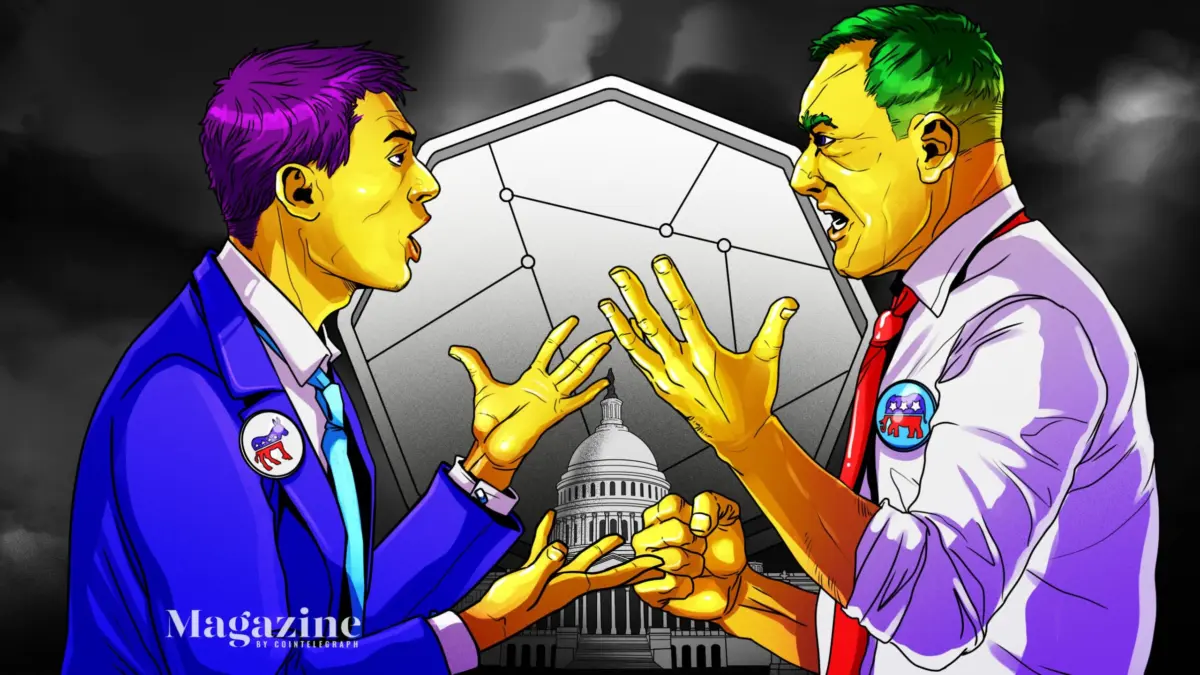
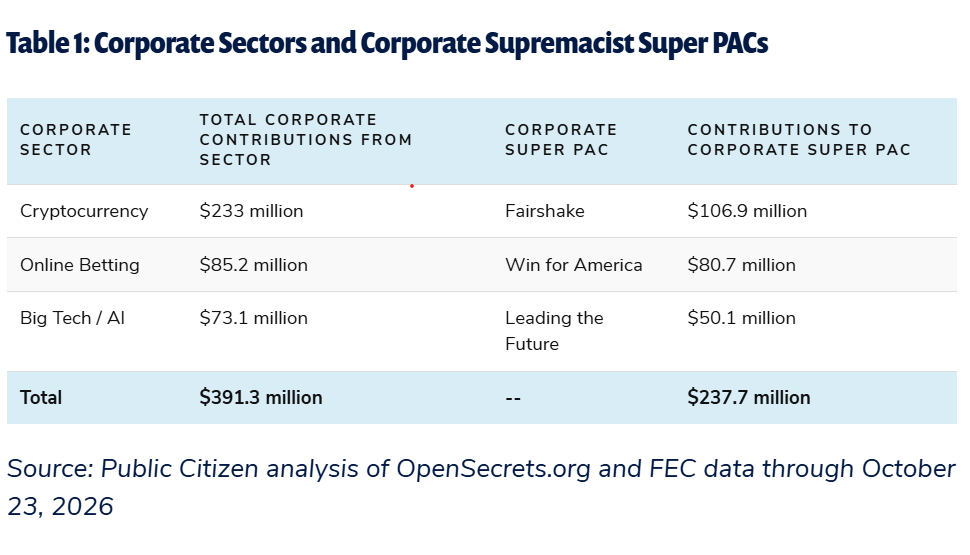
Cryptocurrency companies poured a staggering $233 million into political action committees and campaign coffers during the 2026 United States midterm election cycle, attempting to cement a favorable regulatory landscape in Washington. Yet, as the dust settles on the election results, the digital asset industry finds itself facing a dramatically altered political landscape. Public Citizen’s exhaustive analysis of federal filings reveals the sheer scale of the sector’s financial footprint, but the returns on that investment are proving complex and fraught with resistance as Capitol Hill prepares for a shift in power.
Democrats managed to secure victories in both chambers of Congress, winning control of the legislative branch. This newfound majority grants them the opportunity to completely reshape, block, or rewrite the stalled CLARITY Act—a landmark piece of legislation originally designed to establish comprehensive federal rules for crypto markets. The road ahead for digital asset advocacy is steep, highlighted by high-profile electoral losses for pro-crypto spending and the looming presence of some of the industry’s most dedicated congressional critics.
Nowhere was the clash between crypto spending and political reality more evident than in Ohio. Despite crypto-backed political action committees deploying a massive $64 million war chest in an effort to unseat him, Democrat and longtime crypto skeptic Sherrod Brown successfully defeated his Republican challenger, Jon Husted. Brown’s victory stands as a significant warning shot to digital asset lobbyists, proving that heavy financial investments cannot always override entrenched political sentiment or local voter dynamics.
Compounding these challenges for the industry is the expected elevation of Senator Elizabeth Warren. As one of crypto’s most vocal and unrelenting critics in Washington, Warren is positioned to take over as the most senior Democrat and expected chair of the powerful Senate Banking Committee in the next Congress. With Warren at the helm, the upcoming legislative sessions are virtually guaranteed to prioritize stronger consumer protections, rigorous scrutiny of political and financial conflicts of interest, and a decisive shift in regulatory authority back toward traditional oversight bodies.
However, political analysts point out that a Democratic majority does not automatically spell total doom for the prospect of market structure legislation. Despite philosophical differences and policy roadblocks, pragmatic voices on both sides of the aisle still see a path forward, provided the industry is willing to make substantial concessions on ethics and accountability.
A Different Deal for Crypto
The legislative momentum behind the CLARITY Act suffered a severe blow back in September when the Senate failed to advance the bill. Deep disagreements over ethical provisions and guardrails contributed heavily to that legislative impasse, leaving the market in a state of regulatory limbo. Following the midterm sweep, Democrats have reportedly already begun internal discussions regarding how to reshape the broader market structure debate.
House Democrats are said to be actively considering expanding proposals previously championed by Representative Maxine Waters into a much broader, more comprehensive market structure bill. Such legislation could incorporate substantially stronger consumer protections, grant an expanded and more aggressive enforcement role to the Securities and Exchange Commission (SEC), and introduce rigid new ethics restrictions targeting the personal crypto activities of public officials.
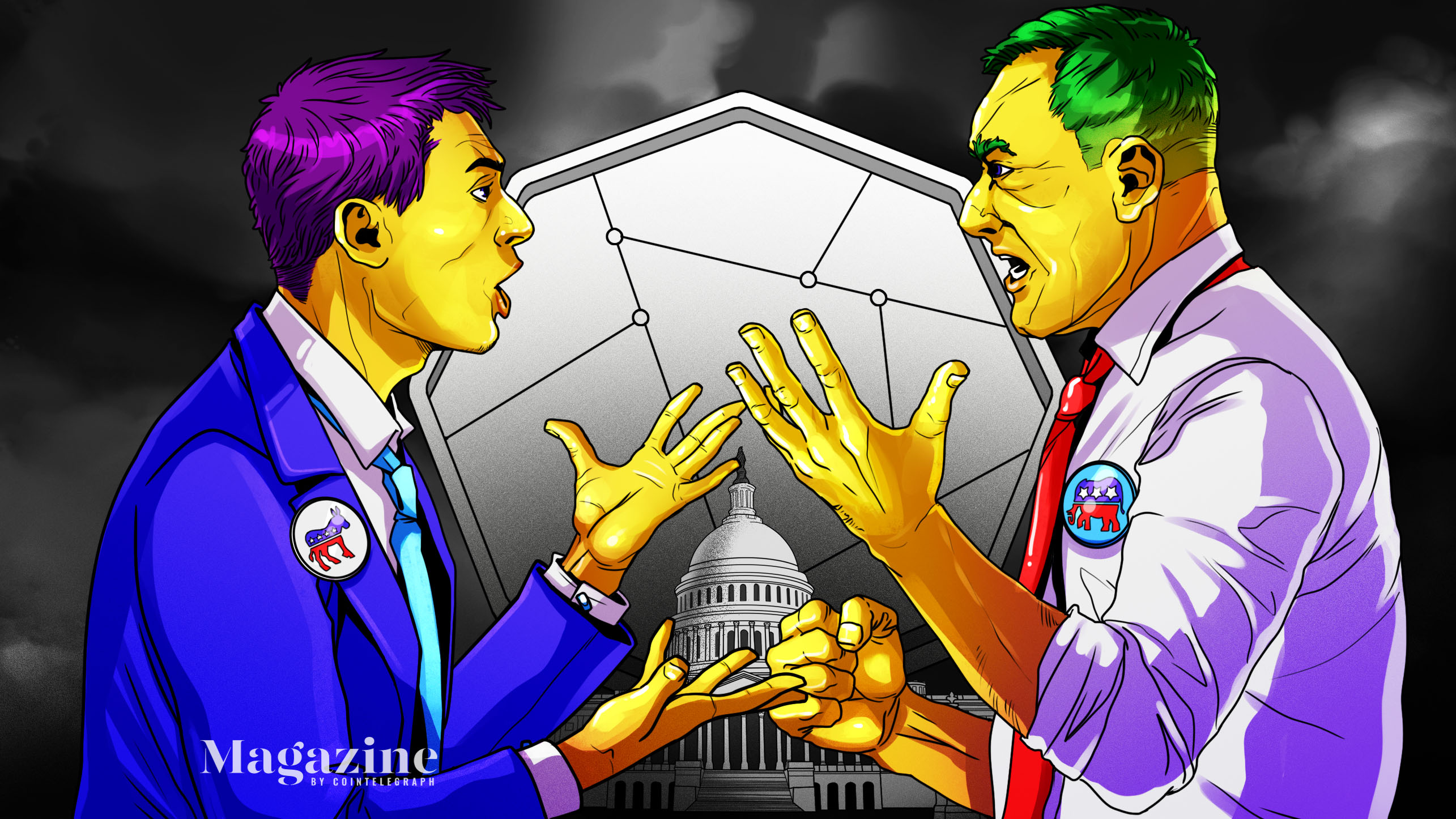
This pivot could finally mean officially separating the digital asset industry’s legitimate, long-term push for clear federal rules from the various political and personal controversies surrounding Donald Trump’s private crypto ventures. Democrats have already signaled clear intentions to investigate the Trump family’s business dealings alongside other major corporate interests, with incoming House Oversight Committee Chair Robert Garcia planning to aggressively pursue inquiries into corporate corruption and conflicts of interest.
Hadley Stern, head of institutions at Silence Laboratories and founder of Fidelity Digital Assets, argues that Democrats are entirely justified in pursuing these investigations, suggesting the digital asset industry itself should welcome the scrutiny. He contends that presidential entanglements are precisely what is poisoning any potential bipartisan deal in Washington. Pointing out that a sitting president’s family launching memecoins and a stablecoin creates an undeniable governance crisis, Stern notes that corporate governance standards in traditional financial institutions would never tolerate such behavior.
Nevertheless, Stern emphasizes that the digital asset industry of 2026 is fundamentally different from the era when Democrats last held the congressional gavel. Moving far beyond the chaotic fallout of the FTX collapse and speculative token projects of 2022, the ecosystem is now maturing into a space defined by federal stablecoin laws, tokenized equities, and traditional financial assets moving on-chain. Attempting to regulate that vast financial evolution by pretending it does not exist is simply no longer a viable strategy for lawmakers.
What Would the Industry Have to Concede?
If the digital asset sector wants to secure lasting legislation capable of surviving future shifts in political control, industry leaders acknowledge they will likely have to accept much more demanding standards of accountability and transparency.
Paul Brody, founder and CEO of Nightfall Networks and former global blockchain lead at Ernst & Young, predicts that traditional banking institutions will ultimately emerge as political winners in this cycle. He expects banks to successfully lobby lawmakers to hold crypto companies to the exact same exacting consumer protection, anti-money laundering, and security standards that govern traditional financial services. While the crypto industry has historically resisted such rigid rules, Brody suggests that adopting a wiser, more pragmatic strategy would involve accepting similar conditions. After all, he notes, blockchain-native ecosystems remain vastly more flexible, programmable, and efficient than legacy financial rails even under stricter regulatory frameworks.
Lindsay Fraser, chief policy officer at the Blockchain Association, echoes the sentiment that consumer protection and technological innovation do not have to be treated as mutually exclusive objectives. In her view, the industry can successfully protect everyday consumers while simultaneously ensuring that federal law accurately reflects how blockchain technology functions in practice. The ultimate goal, Fraser argues, is to craft lasting policy that earns genuine public trust, gives domestic builders a secure future within the United States, and strengthens American financial leadership globally.
Even so, achieving a workable legislative compromise will not be an easy path. Brody warns that the looming threat of a presidential veto remains a distinct possibility, and cautions that digital asset reform will likely be treated as a relatively low legislative priority by congressional leaders compared to urgent battles over federal budgets, ongoing geopolitical conflicts, and sweeping corruption investigations.
How the Binance Hack Could Influence Lawmakers
The high-stakes debate over the midterm elections and the future of market structure legislation played out against the backdrop of a catastrophic security failure: the Binance hack. Widely recognized as the largest exploit in the history of cryptocurrency, the late October breach resulted in the theft of over $6.3 billion, instantly injecting a fresh wave of panic and urgency into discussions surrounding exchange security, operational vulnerabilities, and customer asset protection on Capitol Hill.
Representative Shri Thanedar acknowledges that while upcoming legislation would not instantly solve every potential problem facing the ecosystem, it would provide much-needed regulatory certainty and essential security guardrails. In his view, the multi-billion-dollar hack serves as a stark and undeniable example of the inherent dangers of failing to enact appropriate federal legislation.
Conversely, industry legal experts caution that the hack may harden opposition rather than streamline consensus. Maylea Ma, deputy general counsel at 1inch, argues that rather than making a stronger case for passing the current draft of the CLARITY Act, the devastating incident instead highlights critical problems that the existing legislation completely fails to address. Ma points out that the breach targeted a centralized exchange’s hot wallet and involved a catastrophic signing failure, yet the current legislative draft includes no mandatory insurance funds, no designated loss payees, and no hot wallet transaction caps that could have mitigated the losses or forced exchanges to implement the rigorous security standards necessary to prevent the breach in the first place.
Amanda Fischer, policy director at advocacy group Better Markets, reinforced this critical perspective by stating publicly that the episode laid bare how completely unfit the current crypto ecosystem is for mainstream finance, arguing that cryptocurrency exchanges should never be permitted to act as custodians due to the systemic honeypot risks they create for the broader financial system.
Ma suggests that the fallout from the exploit is almost certain to heavily influence the next congressional vote on the CLARITY Act, likely making lawmakers significantly less willing to pass industry-friendly legislation unless it is accompanied by ironclad consumer protections and strict operational mandates. Having spent years successfully convincing Washington that it deserves a permanent seat at the policy table, the cryptocurrency industry must now decide whether it is willing to accept the heavy regulatory obligations that come with it.