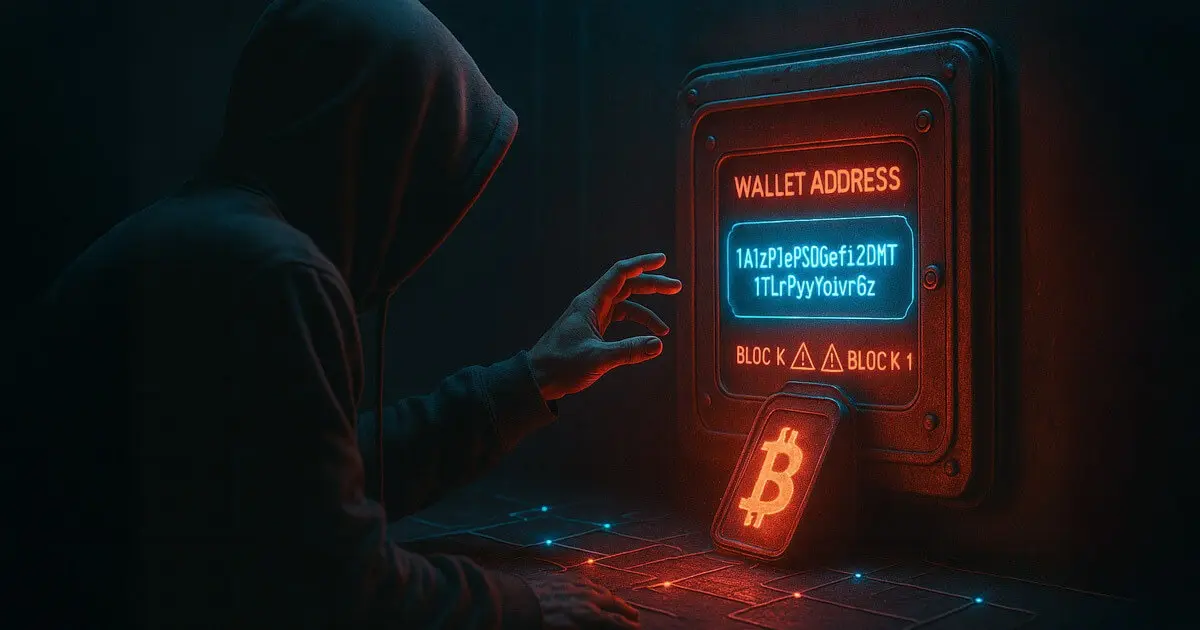
Cryptocurrency analysts at BitMEX Research have issued an urgent warning to the digital asset community regarding a sophisticated and deceptive new scam campaign specifically targeting early Bitcoin holders. The malicious scheme is heavily focused on long-dormant cryptocurrency addresses dating back to the foundational days of the network in 2011, attempting to trick unsuspecting or inactive holders into surrendering control of their digital assets or sensitive personal information.
According to researchers, the perpetrators behind this operation are exploiting long-dormant addresses by injecting fabricated transactions and misleading, deceptive messages directly onto the blockchain. They achieve this by utilizing OP_Return outputs, which are an optional field embedded within Bitcoin transactions capable of carrying arbitrary data. Because these messages appear directly on-chain, they can lend a false sense of legitimacy to unsuspecting observers who check the blockchain ledger history of their older addresses.
In one prominent and well-documented case uncovered by analysts, the malicious actors targeted the notorious "1Feex" wallet. This specific address holds approximately 80,000 Bitcoins that are widely believed to have been illicitly acquired during the historic security breach of the Mt. Gox exchange years ago. The attackers carefully crafted an on-chain message directing viewers to a fraudulent, newly minted website that brazenly impersonates the long-defunct Wall Street financial institution Salomon Brothers.
Fake Legal Claims and Impersonation Tactics
Upon visiting the fraudulent website, targets are met with a fabricated legal notice designed to provoke urgency and panic. The notice claims that the specific Bitcoin wallet in question has been officially designated as "lost or abandoned." To add further weight to the deception, the site invites supposed rightful owners to step forward and prove their claim.
The fraudulent platform outlines two primary methods for victims to verify ownership: signing an on-chain cryptographic message using the private key associated with the wallet, or submitting sensitive personal documentation through a web-based contact form hosted on the site. To maximize psychological pressure, the notice explicitly states that if no formal response or claim is received by October 5, the wallet will be legally declared abandoned, effectively forfeiting any perceived rights to the funds.
BitMEX Research has firmly debunked the legitimacy of the website, emphasizing that it bears no credible connection to the real Salomon Brothers financial firm or its historical leadership structure. While the fraudulent site attempts to construct an aura of authenticity by displaying a list of real individuals who genuinely worked at Salomon Brothers back in the 1980s, investigators confirmed that none of these former employees have any association whatsoever with the spurious entity running the scam.

The analytical platform noted that this specific operational approach bears strong thematic similarities to previous controversial attempts involving the same high-profile Bitcoin address. Observers have pointed out parallels to prior situations where public figures, such as Calvin Ayre, previously funded legal actions centered around the exact same dormant wallet, creating a confusing landscape that bad actors are eager to exploit for social engineering purposes.
In a public advisory statement released via social media, BitMEX Research cautioned the broader cryptocurrency community: "The links between this company and this website are fake. There is a page with an ‘advisory board’ that contains real people who worked at Salomon Brothers in the 1980s, however, these people seem to have no link to this new spurious entity."
Broader Implications and Social Engineering Concerns
The warning quickly drew widespread attention and discussion across various cryptocurrency community forums and social media channels. Experienced blockchain users were quick to point out glaring operational flaws in the scam’s premise, noting that a legitimate wallet owner wishing to prove activity or control would simply need to move a minor, negligible amount of Bitcoin rather than transferring or exposing their full balance or private keys.
These glaring inconsistencies have led numerous cybersecurity analysts and community members to conclude that the entire campaign is merely a facade for a much broader social engineering effort. Rather than successfully convincing victims to hand over private keys directly—which remains difficult for sophisticated holders—the scheme appears primarily designed to harvest sensitive personal data, identification documents, and metadata under the guise of compliance with a fake legal framework.
BitMEX and other industry security experts have strongly emphasized that users, particularly veterans of the early cryptocurrency space who may still hold dormant holdings, should exercise extreme caution. They strongly advise against interacting with the suspicious contact forms, clicking links embedded in OP_Return outputs from unknown sources, or providing any personal details or cryptographic signatures to unverified third-party websites.
The emergence of these creative and deceptive tactics highlights the steadily increasing complexity and professionalization of crypto-related fraud. As blockchain analysis tools improve and law enforcement agencies crack down on traditional crypto heists, malicious actors are increasingly turning toward psychological manipulation, legal intimidation, and social engineering to target holders who may be out of touch with the day-to-day security landscape of the modern digital asset ecosystem.
This growing wave of sophisticated attacks comes amid an already challenging period for digital asset security worldwide. According to comprehensive industry data tracking cybercrime and digital theft, malicious actors and state-backed hacking syndicates successfully stole over $2.1 billion across 75 separate security incidents during the first half of the year alone. This staggering figure represents an approximate 10% increase in total stolen funds compared to the exact same reporting period in the previous year, underscoring the urgent need for heightened vigilance, robust operational security practices, and continuous consumer education across all sectors of the cryptocurrency economy as these complex fraud schemes continue to evolve.