

The ongoing ideological battle over the soul and architecture of the Bitcoin network has reached a new milestone. According to data from The Bitcoin Portal, the number of Bitcoin nodes signaling support for Bitcoin Improvement Proposal 110 (BIP-110) has climbed to 2.38%. This temporary soft fork, designed to impose strict limits on the amount of data included in each transaction at the consensus level, is currently being run by 583 out of 24,481 active nodes, primarily utilizing the Bitcoin Knots software implementation.
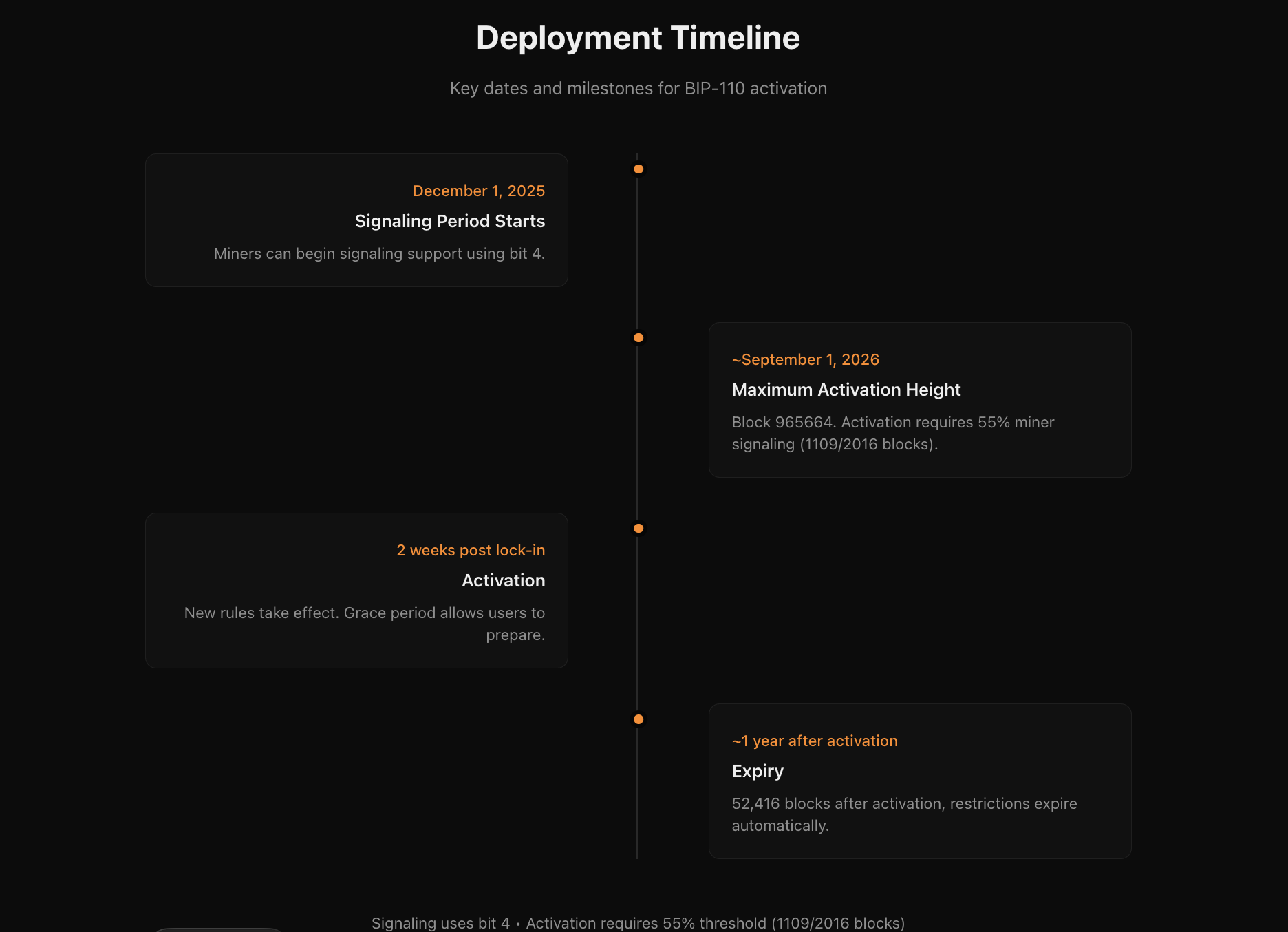
The introduction of BIP-110 represents a direct counter-offensive by a faction of the Bitcoin community following a controversial software upgrade that removed long-standing data constraints. Specifically, BIP-110 proposes limiting the size of transaction outputs to 34 bytes while capping the OP_RETURN data limit at 83 bytes. According to documentation on the proposal’s GitHub page, this temporary soft fork is slated to be deployed for a term of one year, with potential extensions or structural alterations to be evaluated after the initial 12-month period concludes.
The root of this deepening division traces back to how Bitcoin handles arbitrary data, a topic governed by the OP_RETURN script code. OP_RETURN allows users to embed custom messages, files, and data directly into the blockchain. While the feature has existed for years, it has become the subject of intense controversy within the developer and user communities, particularly following the rollout of Bitcoin Core version 30, the latest major upgrade of the network’s most widely adopted node software implementation.

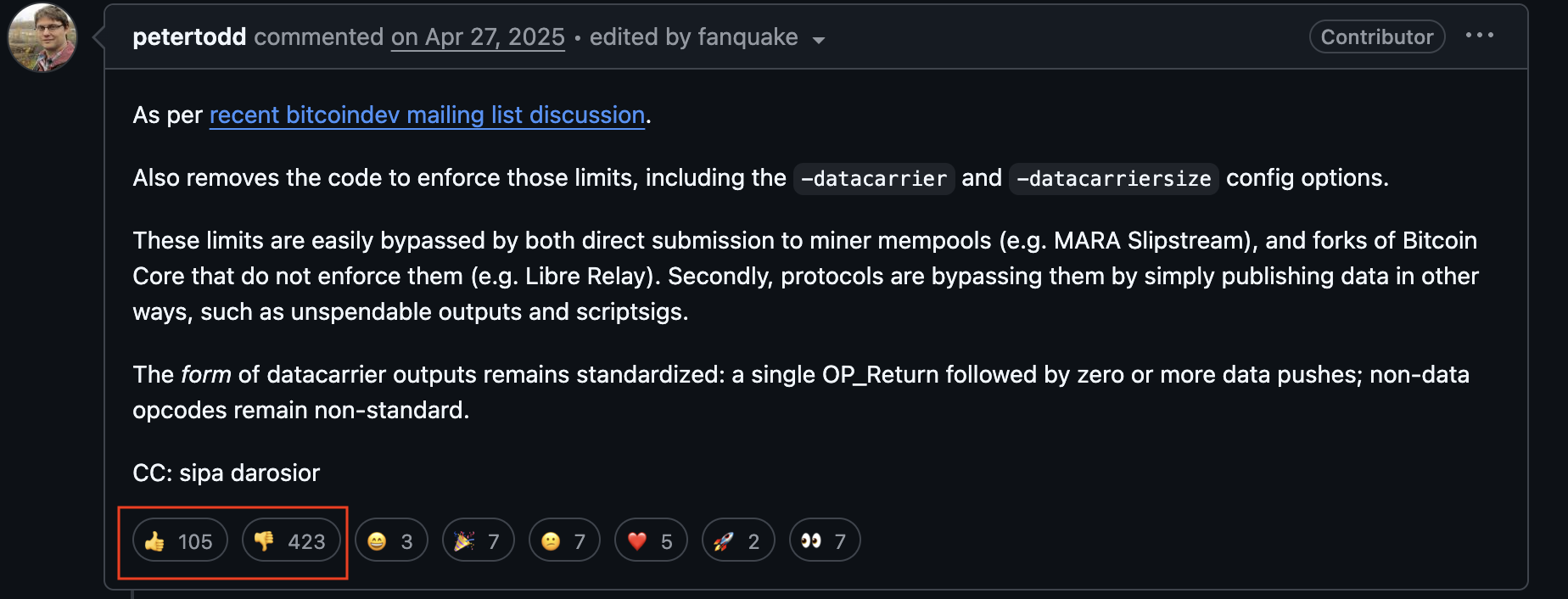
Prior to version 30, the OP_RETURN data limit was tightly capped at 83 bytes, serving as a friction point against bloating the blockchain ledger. However, through a controversial pull request initially proposed in April 2025, Bitcoin Core developers unilaterally removed this restriction in Bitcoin Core version 30. Public records on GitHub indicate that the pull request faced substantial opposition from various members of the broader Bitcoin community, who viewed the removal as a dangerous step away from Bitcoin’s core economic and technical principles.
The Arbitrary Data Issue Deepens Community Divides
The deployment of Bitcoin Core version 30 in October 2025 quickly triggered a torrent of negative feedback from critics who argue that uncapping arbitrary data limits effectively invites and incentivizes spam on the immutable Bitcoin ledger. Critics point out that embedding non-monetary, arbitrary data directly into transactions artificially inflates the storage and bandwidth costs required to run a full Bitcoin node.
Unlike high-throughput alternative blockchains that generate massive amounts of data and inevitably force users to rely on centralized data centers or specialized enterprise hardware, Bitcoin has historically prided itself on accessible decentralization. A core tenet of the Bitcoin network has always been that a fully validating node can be easily operated on standard, consumer-grade hardware.
Opponents of the Bitcoin Core v30 change argue that escalating hardware and storage requirements will gradually price everyday enthusiasts out of running nodes, accelerating centralization across the network. According to critics, undermining the ability of individuals to independently verify the blockchain threatens Bitcoin’s fundamental value proposition as a decentralized, trustless monetary network.
Voicing deep concern over the trajectory of the protocol, Bitcoin advocate and educator Matthew Kratter compared the phenomenon of blockchain spam to a destructive natural parasite during a public commentary: "It’s like one of those parasitical plants, like ivy, completely covering a tree, eating up the tree, and then the inner scaffolding collapses, and the ivy collapses because it’s basically destroyed the structure. This is what spam has the potential to do to Bitcoin."
Conversely, the removal of the data limit is not without its defenders within the core development ecosystem. Proponents of the uncapped approach, including prominent figures like Bitcoin Core contributor Jameson Lopp, have argued that arbitrary data filters and artificial protocol restrictions ultimately achieve very little in terms of permanently stopping network spam. Supporters of the upgrade contend that market-driven fee dynamics are a more natural mechanism for managing block space, and that hardcoding limits into the consensus layer can introduce unintended complications.
As the debate persists, the steady adoption of BIP-110 by nodes running Bitcoin Knots highlights a growing faction of network participants willing to actively push back against protocol changes they deem harmful. With 2.38% of nodes now signaling support for the temporary soft fork, the conversation surrounding data bloat, node decentralization, and the future governance of Bitcoin remains one of the most critical storylines in the digital asset ecosystem.