
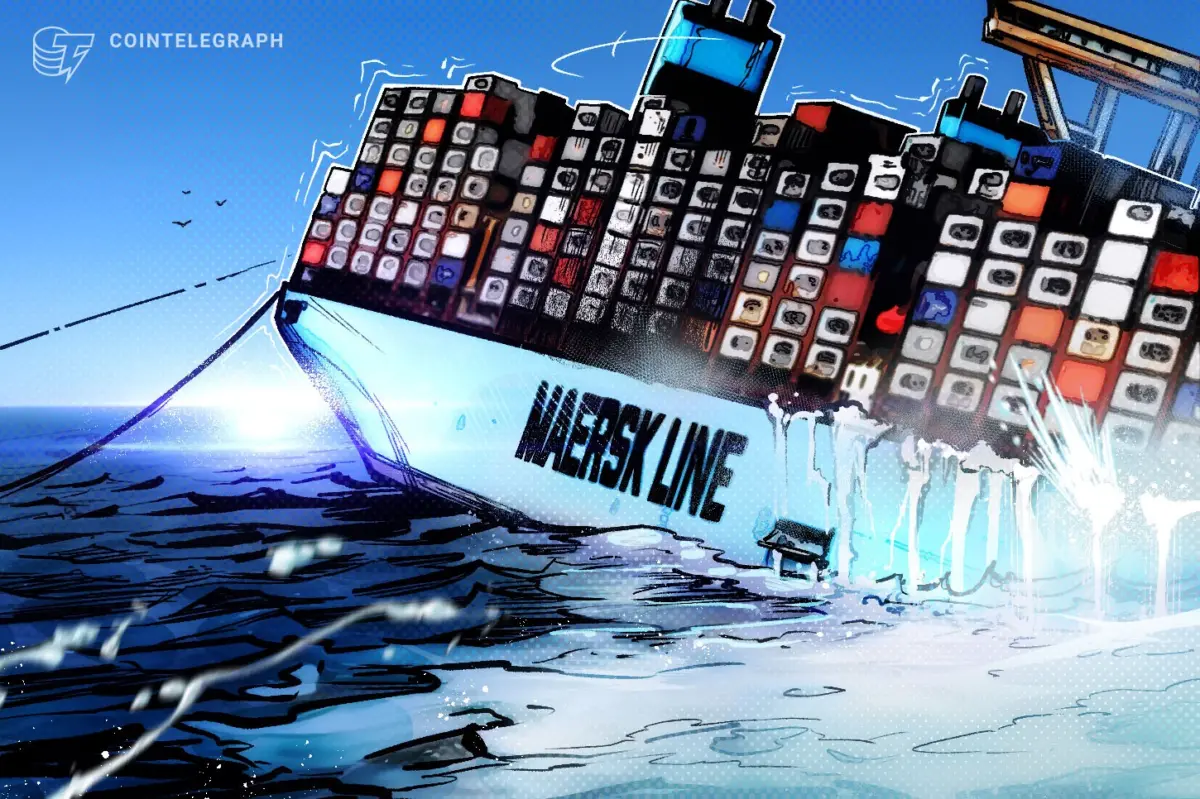
Blockchain projects continue to struggle with a staggering failure rate exceeding 90%. With every passing month, it seems another high-profile corporation quietly adds its underperforming distributed ledger initiative to the growing corporate technology graveyard. One of the most recent and notable casualties of this trend is A.P. Moller-Maersk, which announced the permanent termination of TradeLens—a heavily publicized global shipping and trade platform built using enterprise blockchain technology developed in partnership with tech giant IBM.
Yet, despite the widespread surprise and disappointment that often accompany these announcements, such failures are rarely random. In many cases, they are entirely predictable and could be avoided if enterprise leadership more closely observed fundamental lessons in innovation diffusion, organizational psychology, and technology adoption lifecycles.
Innovation Is Not Monolithic
One of the most persistent and damaging mistakes that legacy corporations make is treating innovation as a single, monolithic concept. Unfortunately, modern business associations, corporate media outlets, and prominent business schools have spent decades churning out endless parades of innovation lists, rankings, and awards that implicitly reinforce the flawed idea that all innovation operates under the same rules and dynamics.
When academic and business literature first began attempting to systematically distinguish between different types of innovation, seminal works like Clayton Christensen’s bestselling book, The Innovator’s Dilemma, helped ignite crucial conversations regarding how disruptive technologies displace established market leaders. However, Christensen’s framework is only part of the puzzle. A far more robust framework for categorizing innovation comes from organizational scholars Rebecca Henderson and Kim Clark, who successfully identified four distinct types of innovation: incremental, modular, architectural, and radical.
While certain enterprise applications may comfortably fit into the modular or architectural categories, blockchain technology is, at its foundational core, deeply disruptive. Because truly disruptive technologies are designed to fundamentally replace existing operational frameworks, complex multi-party interactions, and entrenched intermediate institutions, the most successful early applications and breakthroughs almost always originate from smaller, highly agile startup firms rather than established Fortune 100 conglomerates like IBM, Maersk, or similar corporate giants.
Complexity Is an Innovation Killer
The inherent challenges of deploying new technology are further compounded by friction and friction’s ultimate by-product: complexity. Complexity acts as a powerful innovation killer, a dynamic that is especially pronounced when dealing with modular and radical innovations. Decades ago, renowned sociologist Everett Rogers noted the clear inverse relationship between the complexity of an innovation and the willingness, as well as the practical ability, of users and organizations to adopt it.
This complexity manifests across multiple dimensions. It is not merely a matter of understanding the underlying code or the technical mechanics of a blockchain application itself. Rather, it encompasses internal decision-making processes, the profound level of structural organizational change required to achieve adoption, and the sheer volume of new knowledge that employees, partners, and customers must acquire just to implement the system effectively.
Industry experts have frequently highlighted the immense operational difficulties involved in bringing enterprise projects like TradeLens to life. Observers noted that the technology was remarkably complex, demanded significantly more computing power, and proved far more expensive to run than existing, centralized legacy databases. Compounding these technical hurdles within the IBM and Maersk partnership was the sheer bureaucratic weight and complex structural nature of two massive multinational corporations trying to coordinate a unified technological vision.
This dynamic echoes the lessons learned during the last major wave of technological innovation—the rapid expansion of the social media space. Notably, it was not the established, decades-old media conglomerates or legacy communication giants that built the foundational tools, technologies, and platforms that drove early innovation and widespread adoption. Instead, it was nimble startups characterized by short decision-making cycles, minimal internal friction required to adapt, and corporate cultures where new knowledge could be assimilated almost instantaneously across the entire organization.
Given these enduring economic and organizational dynamics, the initial successful innovative breakthroughs for blockchain technology are far more likely to emerge from simplistic, highly focused applications developed by much smaller, more entrepreneurial firms. These smaller players are better positioned to replace or reshape straightforward processes regarding how work gets done, how products are manufactured, or how transactions are facilitated efficiently between two parties without excessive bureaucratic overhead.
Different Innovation Types Require Different Levels of Risk Tolerance
Another critical differentiator separating the four categories of innovation is the vastly different levels of risk tolerance required to be an effective innovator. The risk-tolerance threshold for simple incremental innovation is remarkably low, whereas radical innovation demands a significantly higher, often uncomfortable level of risk tolerance from both leadership and stakeholders.
It is vital to note that this tolerance level is not merely an assessment of the probability that a specific project might fail. Accurately assessing innovation risk requires evaluating the likelihood of catastrophic failure for the entire organization. In the context of radical innovation, a catastrophic failure means that if the broader adoption or technology initiative collapses, the enterprise itself risks insolvency or total structural failure, rather than just the quiet shelving of a single underperforming project.
A classic illustration of navigating high-stakes operational risk can be found outside of the tech sector, in Billy Beane’s famous application of sabermetrics to roster construction and management for the Oakland Athletics in the early 2000s. This approach represented a profound modular innovation within professional sports management that carried immense personal and organizational risk—risks that virtually no other Major League Baseball franchise was willing to assume at the time.
For the Athletics, an absolute operational failure of the strategy would not have meant the literal destruction of the franchise, but the immediate costs would have been exceptionally high. Beane and his analytical staff would have lost their jobs, an alienated fan base might have abandoned the team by refusing to buy tickets and merchandise, and the organization could have suffered severe financial fallout
.
Blockchain technology, by contrast, operates firmly in the realm of radical innovation. As such, it requires an even higher level of institutional risk tolerance—a genuine corporate willingness to risk significant capital and standing. Legacy companies that prefer to tinker cautiously around the edges through incremental or architectural innovation projects—where failure simply means walking away with minimal scars—are statistically far more likely to experience continued blockchain failures during these early developmental stages of the industry.
Decentralized technologies and distributed ledgers still hold immense promise for driving much-needed structural changes away from the modern corporate trend toward increasingly concentrated modes of production and centralized power. However, realizing this potential requires enterprise leaders, developers, and entrepreneurs to align their time, capital, and strategic resources with proven lessons in innovation diffusion, giving the broader technological revolution its strongest possible foundation for long-term success.
Lyall Swim serves as the chief innovation officer for Atlas Network. He holds a doctorate in education with an emphasis in organizational leadership from Pepperdine University, alongside a bachelor’s degree in communications and an MBA from Brigham Young University.