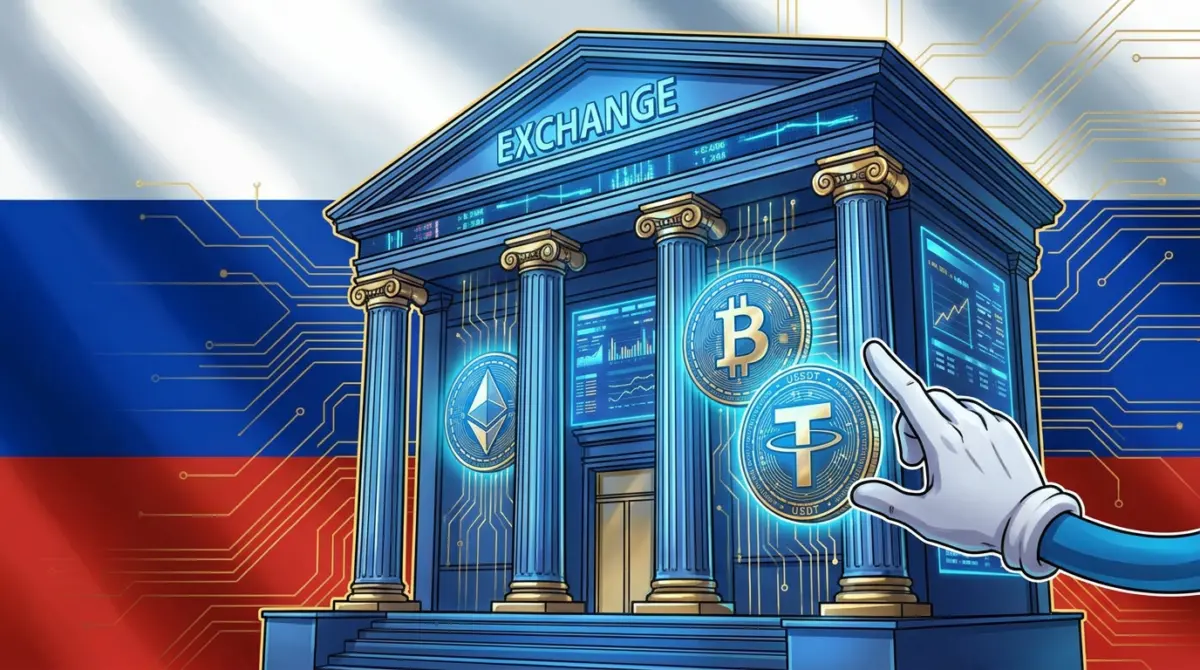
Russia’s central bank has officially finalized a comprehensive set of rules that will allow regulated financial exchanges and intermediaries to offer cryptocurrency trading services to retail investors. Set to take effect on November 17, the framework marks a significant shift in the country’s official stance on digital assets, bringing mainstream cryptocurrencies into a tightly supervised domestic market environment under the direct oversight of the Bank of Russia.
Under the newly minted regulatory guidelines, everyday retail participants—classified as non-qualified investors—will be legally permitted to purchase up to 300,000 rubles, roughly equivalent to $3,700, in cryptocurrency on an annual basis. This spending cap applies across each individual intermediary they utilize, creating a controlled entry point for regular citizens seeking exposure to digital assets. Eligible intermediaries include licensed brokers, professional asset managers, and approved crypto exchange providers.
While everyday citizens face strict annual investment limits, high-net-worth individuals and institutional participants categorized as qualified investors will not encounter purchase restrictions. However, regardless of their financial tier or investor status, all market participants must successfully complete a mandatory knowledge test before they are granted access to execute trades.
The implementation of these retail trading guidelines builds directly upon foundational legislation previously signed into law by Russian President Vladimir Putin on August 4. That landmark legislation formally established a structured, legally recognized cryptocurrency market within the Russian Federation, placing the entire sector firmly under the regulatory authority of the central bank.
Shortly after the presidential signature, on August 11, the Bank of Russia published its draft regulations to begin shaping the practical realities of the market. During this drafting phase, regulatory authorities identified Bitcoin (BTC), Ether (ETH), and Tether (USDT) as the sole digital assets eligible for public trading on domestic platforms. This selective inclusion was determined based on rigorous criteria, including robust market capitalization, strong average daily trading volume, and a verified price history spanning at least five years on established foreign exchanges.
The overarching crypto market law officially took effect on September 1. Following this milestone, the Bank of Russia moved swiftly to authorize Sberbank, the largest financial institution in the country, to begin offering official crypto exchange services to its massive customer base starting in October.
The momentum surrounding Russia’s regulated digital asset ecosystem is expected to accelerate further in the coming weeks. The Moscow Exchange, which operates as Russia’s largest securities marketplace and functions as a publicly traded company, is actively preparing to launch its own dedicated cryptocurrency trading operations on December 1. Initially, the exchange plans to roll out pilot transactions focusing exclusively on the three approved cryptocurrencies: Bitcoin, Ether, and Tether.
Russia to restrict peer-to-peer crypto trading
Even as the Russian financial authorities open official, regulated pathways for retail cryptocurrency participation through traditional banking channels and major securities exchanges, the government is simultaneously tightening restrictions on transactions that occur outside these sanctioned frameworks.
According to directives issued by the Bank of Russia, direct peer-to-peer cryptocurrency trading will be strictly prohibited starting July 1, 2027. This move aims to eliminate informal, unmonitored digital asset exchanges between individuals that bypass the newly established institutional gatekeepers.
Furthermore, regulatory measures are already actively closing off pathways for independent asset management. Transfers of digital assets from regulated domestic financial accounts directly to self-custody wallets have already been banned by the central bank, ensuring that all approved crypto holdings remain trackable within the domestic financial infrastructure. Alongside these domestic trading controls, the Russian Federation maintains a strict, ongoing prohibition against using cryptocurrency as a legal medium of exchange to pay for everyday goods and services within the country.