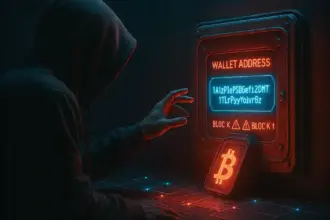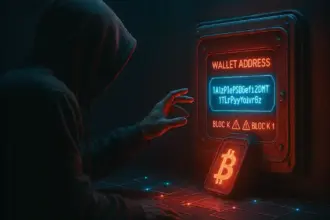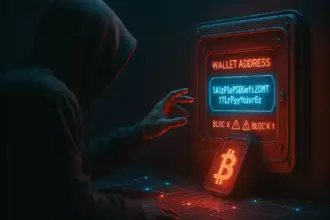
Security analysts and blockchain researchers at BitMEX Research have issued an urgent warning to the cryptocurrency community regarding a newly emerged, highly calculated scam targeting early Bitcoin holders. The malicious campaign specifically focuses on long-dormant cryptocurrency addresses dating back to the foundational years of the asset, most notably 2011. Rather than employing traditional phishing techniques or simple malware distribution, the perpetrators are weaponizing the Bitcoin blockchain itself, utilizing specific transaction features to inject false records and deceptive communications directly into historical addresses.
According to the details published by the research firm, the scammers are exploiting the OP_Return output protocol. This is an optional data-carrying field within Bitcoin transactions that allows users to record arbitrary strings of text or small blocks of data onto the immutable ledger. By leveraging this feature, the attackers have been systematically injecting deceptive messages and forged transaction flags into dormant wallets, hoping to catch long-absent holders off guard if they return to check their balances or review their historical blockchain activity.
The scale and audacity of the campaign became glaringly apparent when the attackers targeted one of the most infamous and heavily scrutinized addresses in cryptocurrency history: the celebrated "1Feex" wallet. This prominent address currently holds approximately 80,000 Bitcoin, a staggering fortune by modern standards, which is widely believed by blockchain forensics experts and law enforcement agencies to have been stolen during the massive hack of the Mt. Gox cryptocurrency exchange during its early days of operation.
In the attack vector directed at the 1Feex wallet, the perpetrators meticulously crafted an on-chain message designed to direct unsuspecting targets toward a thoroughly sophisticated fraudulent website. This rogue domain was engineered to impersonate Salomon Brothers, a legendary and defunct Wall Street investment banking firm that holds an established name in financial history. By wrapping their scheme in the illusion of institutional legacy and regulatory authority, the scammers sought to establish an aura of legitimacy that might disarm even knowledgeable market participants.
Upon visiting the fraudulent replica website, targets are confronted with a fabricated legal notice. The chilling premise presented on the platform claims that the targeted dormant wallet is legally classified as "lost or abandoned." To heighten the sense of urgency and manufactured crisis, the notice establishes a strict compliance deadline of October 5, warning victims that if they fail to step forward and substantiate their ownership rights by that specific date, the wallet and its immense underlying Bitcoin holdings will be legally repossessed, forfeited, or deemed permanently abandoned under fictitious legal statutes.
To successfully navigate the trap and "prove" ownership of the dormant funds, the fraudulent platform instructs supposed legitimate owners to execute one of two perilous actions. Victims are either coerced into signing an active on-chain message using the master private key associated with the historical wallet—which would instantly grant the malicious actors total control over the funds—or they are pressured into submitting highly sensitive personal identification documents and private records through a standard web-based contact form.
Exposing the Fabricated Legal Claims
As the alert gained traction across various security circles, BitMEX Research conducted a deeper investigation into the infrastructure and claims behind the fraudulent Salomon Brothers portal. Their findings revealed that the website bears absolutely no credible, legitimate link to the historical Salomon Brothers enterprise, its corporate successors, or its former executive leadership.
While the fraudulent entity attempted to manufacture a veneer of authenticity by publishing a detailed page featuring a purported "advisory board" listing real individuals who genuinely worked at Salomon Brothers back in the 1980s, subsequent checks confirmed that these former Wall Street professionals have zero connection, association, or knowledge regarding this newly minted and spurious digital entity. The inclusion of their names appears to be a calculated social engineering tactic designed to fool casual observers who perform cursory background checks on the listed names.

Furthermore, cryptocurrency community members and security analysts quickly drew operational parallels between this current campaign and previous historical disputes surrounding the same 1Feex Bitcoin address. Industry observers noted that the strategy mirrors earlier contentious episodes involving prominent and controversial figures, such as Calvin Ayre, who had previously funded and pursued aggressive legal actions attempting to lay claim to or intervene in the status of the exact same historical Bitcoin holdings.
Highlighting the stark disconnect between the website’s claims and reality, BitMEX Research released a formal statement cautioning the public about the deceptive nature of the portal. The firm stated that the alleged corporate links between the historical financial institution and the newly launched website are entirely fabricated. They pointed out that while the advisory board features real veterans of Wall Street from decades past, those individuals operate completely independently and maintain no ties to this spurious entity.
Seasoned cryptocurrency community members and blockchain analysts have also weighed in heavily on the mechanics of the scam, pointing out glaring logical flaws in the premise presented by the fraudsters. Industry commentators emphasized that if a legitimate, original wallet owner wanted to prove ongoing activity or control over a dormant address, they could easily accomplish this by securely moving a tiny, negligible fraction of their Bitcoin balance to a fresh address under their control, rather than risking the transfer of their full balance or interacting with suspicious third-party entities.
This glaring technical mismatch has led security researchers to conclude that the entire campaign is not an authentic legal proceeding, but rather a sophisticated social engineering effort. The overarching objective is clearly to harvest sensitive personal documentation, extract private keys, or manipulate high-net-worth early adopters into compromising their digital asset security under the guise of an imminent legal forfeiture.
The Rising Tide of Crypto-Related Fraud
In light of these findings, BitMEX Research has issued a stern, unequivocal directive to the broader cryptocurrency community: users must completely avoid interacting with the fraudulent contact form, ignore the on-chain data prompts, and under no circumstances disclose personal documentation or private keys. Engaging with such platforms provides malicious actors with the exact leverage they need to drain historical wallets clean.
The emergence of this intricate, history-targeting scam highlights the continually escalating complexity and sophistication of modern cryptocurrency fraud. Cybercriminals and state-backed threat groups are constantly innovating new vectors, moving beyond traditional phishing emails and compromised browser extensions to exploit the very architecture of public blockchains and target the psychological vulnerabilities of long-term holders.
This sophisticated attack arrives against a backdrop of mounting security challenges across the broader digital asset ecosystem. According to comprehensive industry data tracking cybercrime and illicit activities, the first half of the year has already witnessed staggering financial losses. Hackers, scammers, and exploit syndicates have successfully made off with over $2.1 billion across 75 separate, high-profile security incidents. This sobering figure represents a notable 10% increase in total stolen funds compared to the exact same period in the previous year, demonstrating that despite advancements in blockchain analytics and wallet security infrastructure, the financial rewards for malicious actors continue to drive rampant criminal innovation.
As the October 5 deadline cited on the fraudulent website approaches, security agencies, blockchain intelligence firms, and community watchdogs remain on high alert, urging early Bitcoin holders to exercise extreme vigilance, verify the authenticity of any unexpected legal claims, and safeguard their private keys against increasingly elaborate social engineering threats.