Federal Bureau of Investigation agents have arrested a high-profile executive at a Canadian cybersecurity firm in connection with an intensifying, high-stakes international investigation into the notorious ShinyHunters hacking syndicate. The arrest comes on the heels of a massive and deeply embarrassing security breach that saw the cybercriminal group compromise the FBI’s own systems, relieving the bureau of sensitive personal and professional data belonging to thousands of federal agents.
According to multiple sources speaking to KrebsOnSecurity, the arrest took place in Pennsylvania while the suspect was in town to attend a prominent cyber insurance conference. The New York Times was first to report the detention of the Canadian man on suspicion of providing assistance to ShinyHunters, though neither the newspaper nor a public statement issued on X by FBI Director Kash Patel identified the individual by name.
Sources close to the ongoing federal probe revealed that the suspect’s professional background involved specializing in handling delicate ransomware negotiations and extortion advisories on behalf of corporate clients targeted by cybercrime syndicates. Furthermore, sources indicated that operational control and prosecution oversight of the sprawling ShinyHunters investigation have now been centralized at a designated FBI field office in Texas, marking a significant escalation in the federal response to the group’s activities.
An online review of industry events reveals that the Cyber Risk Summit was held at the Loews Philadelphia Hotel from October 5 through October 7. While the conference featured numerous sponsors, its largest financial backer, according to the summit’s official website, was Cypfer, a prominent Canadian cybersecurity firm. According to public professional profiles on LinkedIn, one of Cypfer’s former figures was Edward Dubrovsky, who transitioned to another Canadian security firm and conference sponsor known as CyberSteward. Roughly one month prior to his arrest, Dubrovsky posted on LinkedIn to announce his travel plans to attend the Cyber Risk Summit alongside his colleagues from the CyberSteward team.

A spokesperson for Cypfer later clarified that Dubrovsky was never a founder or co-founder of the firm, contrary to claims on his LinkedIn profile, but instead served in the capacity of a managing director before ultimately submitting his resignation in November 2025. In his professional communications, Dubrovsky frequently emphasized his role in the sector, writing on social media about his anticipation for ongoing industry conversations surrounding global strategy, compliance-driven coercive advisory work, ransomware negotiations, and neutral settlement services.
Federal court records show that on October 8, an individual named Edward Dobrovsky—with a slight misspelling of the surname—was taken into custody in Pennsylvania and slapped with severe federal charges, including cyber extortion and conspiracy. While a substantial portion of the case file, including the core criminal complaint, remains strictly sealed by the court, a handful of documents were indexed on CourtListener.com. These accessible records include a summary of the formal complaint, charging the defendant with conspiracy to threaten to impair the confidentiality of information with the intent to extort money, alongside charges of interference with commerce by threats.
The inmate locator maintained by the U.S. Bureau of Prisons confirms that a 54-year-old Edward Dubrovsky is currently being held at a federal detention facility in Philadelphia. However, court filings indexed on CourtListener reflect a transfer notice issued on October 9, which officially moved the case proceedings to the U.S. District Court for the Eastern District of Texas. Legal experts and sources close to the matter note that the Eastern District of Texas has effectively become the nerve center for the Justice Department’s wider prosecution strategy against the ShinyHunters network. The FBI has declined to comment on the ongoing criminal proceedings.
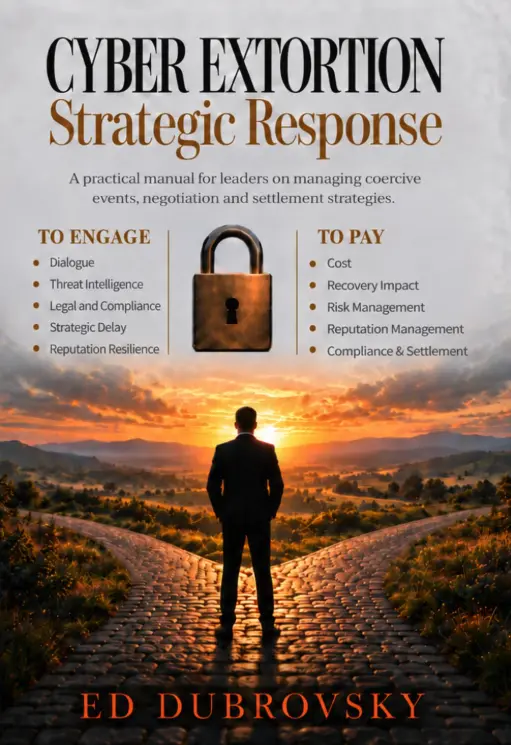
Dubrovsky’s professional background also includes authorship. His LinkedIn profile highlights that he penned "Cyber Extortion Strategic Response," a 252-page volume marketed as a comprehensive guide designed to take readers past the initial ransom note and into the difficult executive decisions that dictate how an organization responds, recovers, and mitigates fallout during a crisis. An excerpt from the book’s publisher description underscores a central tenet of modern incident response, noting that communicating with an extortionist is fundamentally distinct from negotiating a payment, and that entering into communication does not constitute a commitment to pay. The text argues that active engagement can serve alternative strategic objectives, such as testing the validity of threat actor claims, gathering vital intelligence, buying critical time, and preserving institutional options while leadership evaluates its next steps.
Mr. Dubrovsky could not be reached immediately for comment following his arrest. Inquiries directed to other executives at CyberSteward yielded no immediate response. Available court docket entries indicate that Dubrovsky has not yet retained private legal counsel, nor has the court formally appointed a public defender to represent him.

The ShinyHunters cybercriminal collective has established a formidable and destructive footprint in the threat landscape by leveraging sophisticated phishing campaigns and stolen credentials. The group typically infiltrates corporate accounts at software-as-a-service providers, extracts proprietary and confidential data, and subsequently threatens to leak the pilfered files publicly unless extortion demands are satisfied. According to federal estimates, the syndicate has successfully extorted more than $70 million from corporate and institutional victims over the course of the year alone.
Investigators are currently poring over digital devices and hardware seized last month when Dutch law enforcement authorities arrested Pepijn van der Stap, a reformed cybercriminal linked to the ShinyHunters network. Sources indicate that the ongoing analysis of these devices could soon yield additional criminal charges against key principals at other firms that specialize in ransomware negotiation and incident response.
The pressure on federal law enforcement intensified dramatically in the wake of Van der Stap’s arrest. A prominent affiliate within the ShinyHunters hierarchy operating under the online moniker "Rey" seized control of the group’s operations and began publicly taunting the FBI. The taunts stemmed from a devastating cyber intrusion in which the group exfiltrated sensitive files from the bureau’s online recruitment portal. The stolen data reportedly included detailed records concerning individual agents, including their operational units, professional specializations, and private medical and psychiatric documentation.
Reuters reported that the individual operating as Rey was identified as a teenager named Saif Al-din Khader. Khader was subsequently detained by authorities and has reportedly been cooperating with federal investigators. The apprehension occurred as the cybercrime collective attempted to execute an extortion campaign against a digital aviation and navigation unit that had been divested by Boeing in late 2025.