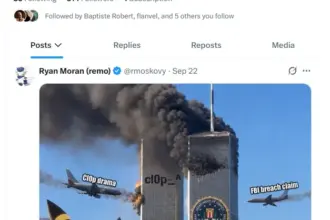
U.S. federal investigators pursuing the prolific ShinyHunters hacking group—which recently compromised highly sensitive data belonging to the Federal Bureau of Investigation—have identified senior executives at two distinct ransomware negotiation firms who maintained unusually close and illicit relations with the extortion syndicate. Sources close to the ongoing federal probe revealed that at least one of these executives, based inside the United States, actively assisted ShinyHunters in operating a public-facing website designed to pressure breach victims into fulfilling ransom demands.
Hackers operating under or aligned with the ShinyHunters banner have claimed responsibility for dozens of major corporate and institutional data breaches dating back to 2019. During its initial years, the collective was primarily operated by cybercriminals residing in France. As those founding members were systematically arrested and jailed by international law enforcement authorities, operational control over the ShinyHunters brand eventually transitioned to an individual known online as “Rey.” Last year, investigators identified Rey as a teenage hacker based in Amman, Jordan. According to official FBI assessments, ShinyHunters has successfully extorted more than $70 million from corporate and public sector victims globally over the course of this year alone.
The group’s escalation culminated in late September, when ShinyHunters successfully infiltrated the official FBI recruitment portal, fbijobs.gov. The cybercriminals brazenly taunted law enforcement by threatening to publicly release a trove of stolen files. According to reports, the compromised material included deeply sensitive internal personnel documents, such as medical and psychological records, Social Security numbers, home addresses, and specific details regarding each employee’s operational unit and professional specialization.
This unprecedented breach of a primary federal law enforcement website prompted the bureau to move with extraordinary speed to identify, arrest, detain, and question any individuals who maintained communication channels with Rey or other key suspects linked to ShinyHunters. On October 3, Reuters reported that Rey had been detained by Jordanian authorities and was actively cooperating with federal investigators.
Rey’s elevation to a leadership role within the syndicate was facilitated by the sudden disruption of another senior operative. On the evening of September 15, law enforcement officers in the Netherlands executed a high-stakes raid, arresting convicted hacker and prominent ShinyHunters suspect Pepijn van der Stap. Dutch police reportedly deployed flash-bang grenades to stun and apprehend Van der Stap precisely as he remained logged into various active online accounts.
According to sources close to the investigation, authorities apprehended Van der Stap while he was actively using his Signal instant messaging application. This tactical timing granted investigators immediate access to his recent communications history, laying bare a network of frequent contacts that included professional ransomware negotiators situated in both Canada and the United States.

Multiple sources with direct knowledge of the matter indicated that Van der Stap’s decrypted Signal messages served as the pivotal clue required to unravel a separate, sinister plot that emerged immediately following his arrest. The Dutch news outlet RTL reported last month that investigators uncovered indications of a murder-for-hire plot directed at targets abroad, with preliminary evidence suggesting Van der Stap may have issued the orders for the attacks, though there is no indication those violent directives were ever executed.
The digital footprint left behind by Van der Stap quickly rippled across international borders. On October 9, KrebsOnSecurity broke the news that the FBI had arrested a 54-year-old Canadian cybersecurity executive named Edward Dubrovsky in connection with the broadening ShinyHunters investigation. Dubrovsky, who recently published a book on cyber extortion management that explicitly advised organizations to always maintain communication and engage with hackers, was formally charged in U.S. federal court with threatening to disclose stolen data and interfering with interstate commerce through extortion, according to court documents reviewed via CourtListener. Politico reported that federal prosecutors requested Dubrovsky be held in custody pending trial and that all case records remain sealed from public view.
A confidential source close to the investigation revealed that Van der Stap’s Signal archive demonstrated frequent, direct conversations between the Dutch hacker, Dubrovsky, and at least one executive at a prominent U.S.-based consulting firm. Remarkably, these communications showed that the executives frequently possessed detailed knowledge regarding newly compromised ShinyHunters victims well before the victim organizations themselves had even discovered or acknowledged the security breaches.
Perhaps most explosive among the federal findings was the revelation from the Dutch hacker’s chat logs indicating that Dubrovsky was fully aware that ShinyHunters had exfiltrated highly sensitive personnel data directly from core FBI servers. Despite possessing this critical intelligence, Dubrovsky never notified the bureau of the breach prior to ShinyHunters publicly announcing their coup on social media and threatening to leak the bureau’s internal files.
SHINYWIRE
As the investigation deepened, federal investigators uncovered evidence suggesting that at least one executive at a major U.S.-based consulting firm played a direct, operational role in managing the now-defunct ShinyHunters victim extortion portal, known as "shinywire[.]com." While KrebsOnSecurity withheld the specific name of the U.S. firm and the suspected executives pending formal criminal charges, the entity is described as a prestigious consulting organization with a workforce exceeding 1,000 associates.
The Shinywire platform remained active from approximately May 3, 2026, until October 16, cataloging entries for nearly 100 distinct organizations compromised by the ShinyHunters collective. Each entry served as an aggressive pressure point, urging targeted entities to quickly engage with the cybercrime syndicate to negotiate payment terms. To substantiate their threats, the pages hosted samples of stolen corporate files, accompanied by explicit warnings that the entire repository would be published online should the victim fail to comply with financial demands.

Cached records indexed by security services such as urlscan.io demonstrated how the portal targeted major corporate entities. One prominent listing targeted Intuitive Surgical, an American medical technology company that suffered a network breach in March 2026 after an employee fell victim to a sophisticated, targeted phishing email campaign that compromised internal credentials.
Under the syndicate’s operational model, victim organizations that refused to engage or negotiate within a strict seven-day window found their proprietary and stolen data permanently published on the main ShinyHunters victim shaming blog, an underground site accessible exclusively via the Tor anonymity network.
The fallout from these arrests also exposed deep fissures within the corporate leadership of the cybersecurity industry. In mid-October, The Globe and Mail reported that months prior to his arrest by the FBI, Edward Dubrovsky had filed a civil lawsuit in Ontario alleging he had become collateral damage in a scorched-earth campaign orchestrated by a former business partner aiming to destroy a rival industry executive.
Dubrovsky’s legal action targeted Daniel Tobok, the former chief executive of Cypfer, a prominent Toronto-founded cybersecurity firm maintaining international offices across the United States, Britain, the Netherlands, the United Arab Emirates, and Mexico. Having originally partnered in 2017 to build Cypfer—where Dubrovsky served as a managing partner and chief operating officer—the two experienced a severe falling out by 2024. Dubrovsky’s court filings accused Tobok of gradually freezing him out of core business operations and executing increasingly erratic administrative decisions.
Tobok vigorously denied the allegations and filed a formal counterclaim, accusing Dubrovsky of misappropriating confidential corporate information and engaging in unfair competition through concurrent work with another entity called CyberSteward Inc. Furthermore, Tobok’s filings asserted that Dubrovsky had misrepresented his status as a founding member of Cypfer and held no legitimate shareholder equity in the firm.
GHOSTBYTE
Interviews conducted with several former colleagues of Daniel Tobok revealed that as far back as eight years ago, industry actors and ransomware purveyors frequently referred to him by a distinct moniker: "Ghostbyte." In 2018, a Canadian company fell victim to an intrusion by Dharma, a prolific Russian-language ransomware affiliate program that surfaced in 2016. When the victim informed the Dharma ransomware representative that they were leaning toward paying the extortion demand due to unrecoverable encrypted files, they requested a reliable guarantee that the cybercriminals would honor their word upon payment.

A redacted copy of the Dharma representative’s reply instructed the victim to reach out to an external IT contact in Canada capable of facilitating such guarantees, explicitly recommending an email address designated as [email protected]. The cybercriminals advised the victim that local IT intermediaries frequently resolved such predicaments in Canada and that engaging their services was a necessary step to secure the decryption keys.
While it remains publicly unclear whether Tobok personally utilized the Ghostbyte email address referenced in the Dharma correspondence, digital intelligence gathered by breach tracking service Constella Intelligence indicates a strong digital overlap. Constella identified that an email address frequently used by Tobok—[email protected]—was directly associated with at least two online accounts operating under the username "ghostbyte," including a registered Snapchat profile. Furthermore, Constella analysis connected the Dharma representative’s fallback email address to a cryptocurrency wallet that had processed dozens of high-value bitcoin transactions.
In an official statement released by Cypfer, company representatives asserted that their corporate mandate does not encompass making or facilitating ransomware payments. Cypfer maintained that company leadership learned of Dubrovsky’s arrest exclusively through media reports, emphasizing that the firm had received no outreach from law enforcement and was not the target of any active federal investigation.
The statement further clarified that CyberSteward and Cypfer operate as entirely distinct legal entities with no overlapping officers, directors, or employees. Cypfer noted its recent acquisition by the Apros Group, a holding company led by Jason Hogg, a former FBI special agent and former chief executive of Aon Cyber Solutions Group. Aon had previously acquired Cytelligence in 2020, a security consulting firm where Tobok served as founder and CEO and Dubrovsky operated as a managing partner.
CONFLICTING INTERESTS
Within the United States, paying a ransom to cybercriminals in exchange for decryption keys or assurances that stolen data will be permanently deleted is not inherently illegal, provided the targeted group is not subject to formal economic sanctions imposed by the U.S. Treasury Department. Because ShinyHunters remains absent from current sanctions lists, corporate victims have historically retained legal leeway to pursue financial settlements.
Industry standards dictate that cyber insurance providers typically direct breached enterprises to specific incident response firms. However, a profound ideological divide splits the forensic community: not all cybersecurity and incident response companies are willing to facilitate extortion payments. When conservative firms refuse to reward criminal syndicates, clients often replace them with remediation providers possessing no such ethical reservations.

A prominent example occurred in December 2024, when ShinyHunters targeted the education technology firm PowerSchool, exfiltrating private records concerning 62 million students and 9.5 million teachers across the United States and Canada. PowerSchool reportedly paid a $2.85 million ransom demand with the operational assistance of CyberSteward. Although a ShinyHunters affiliate involved in the incident was subsequently sentenced to four years in prison, the financial payout failed to halt secondary extortion attempts. By May 2025, individual school districts began receiving independent ransom demands utilizing samples from the identical stolen data set, underscoring the stark reality that no technical mechanism exists to verify whether threat actors have truly deleted pilfered records.
Leading incident response and forensics firms, including Coveware and Unit 221B, have consistently warned victims against paying ransom demands to ShinyHunters, publicly highlighting that so-called "destroyed" data is frequently retained, resold, or weaponized to directly extort downstream clients. The FBI reinforced this guidance in an official public service announcement warning against compliance with the syndicate.
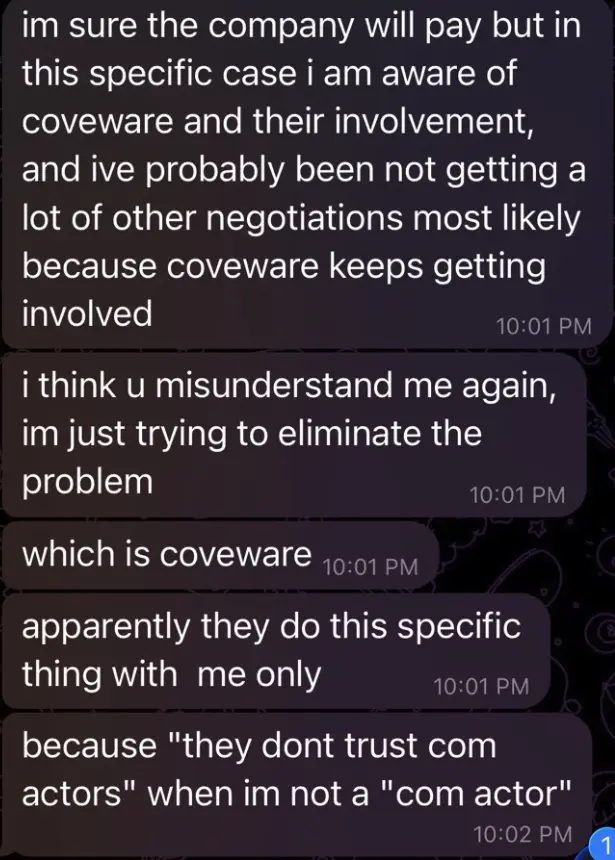
This firm stance against extortion made enemies within the cybercrime underworld. Internal communications retrieved by investigators and shared with security researchers illustrated the intense frustration experienced by ShinyHunters leadership regarding Coveware’s public advisories. In private Telegram chats from May 2026, the primary ShinyHunters account complained bitterly to a co-conspirator that Coveware’s warnings were actively depressing the syndicate’s successful payout rates. The cybercriminals explicitly discussed devising methods to "eliminate the problem" posed by Coveware’s interference in victim negotiations.
Mark Camillo, chief executive of CyberAcuView—an industry consortium established by major cyber insurance carriers—pointed out that fee structures within the ransomware remediation sector frequently create inherent conflicts of interest. While some firms operate on flat retainer models, others specializing in ransom negotiation charge a contingency fee calculated as a percentage of the final transaction amount.
Camillo warned that contingency-based pricing inherently misaligns incentives, as negotiators stand to profit directly from higher ransom settlements rather than aggressively driving down acquisition costs. Emphasizing the need for greater transparency across the cyber insurance and incident response ecosystem, Camillo noted that no commercial entity should derive financial benefit solely from the scale of a criminal extortion payout.
Federal prosecutors have increasingly targeted these conflicts within the legal system. The U.S. Department of Justice recently indicted MonsterCloud CEO Zohar Pinhasi on wire fraud and conspiracy charges for allegedly billing clients millions for remediation while secretly paying out millions to ransomware hackers behind their backs. Similarly, a Florida-based ransomware negotiator was sentenced to prison for conspiring with the Blackcat/ALPHV syndicate to leak confidential client negotiating strategies to maximize criminal extortion yields.