
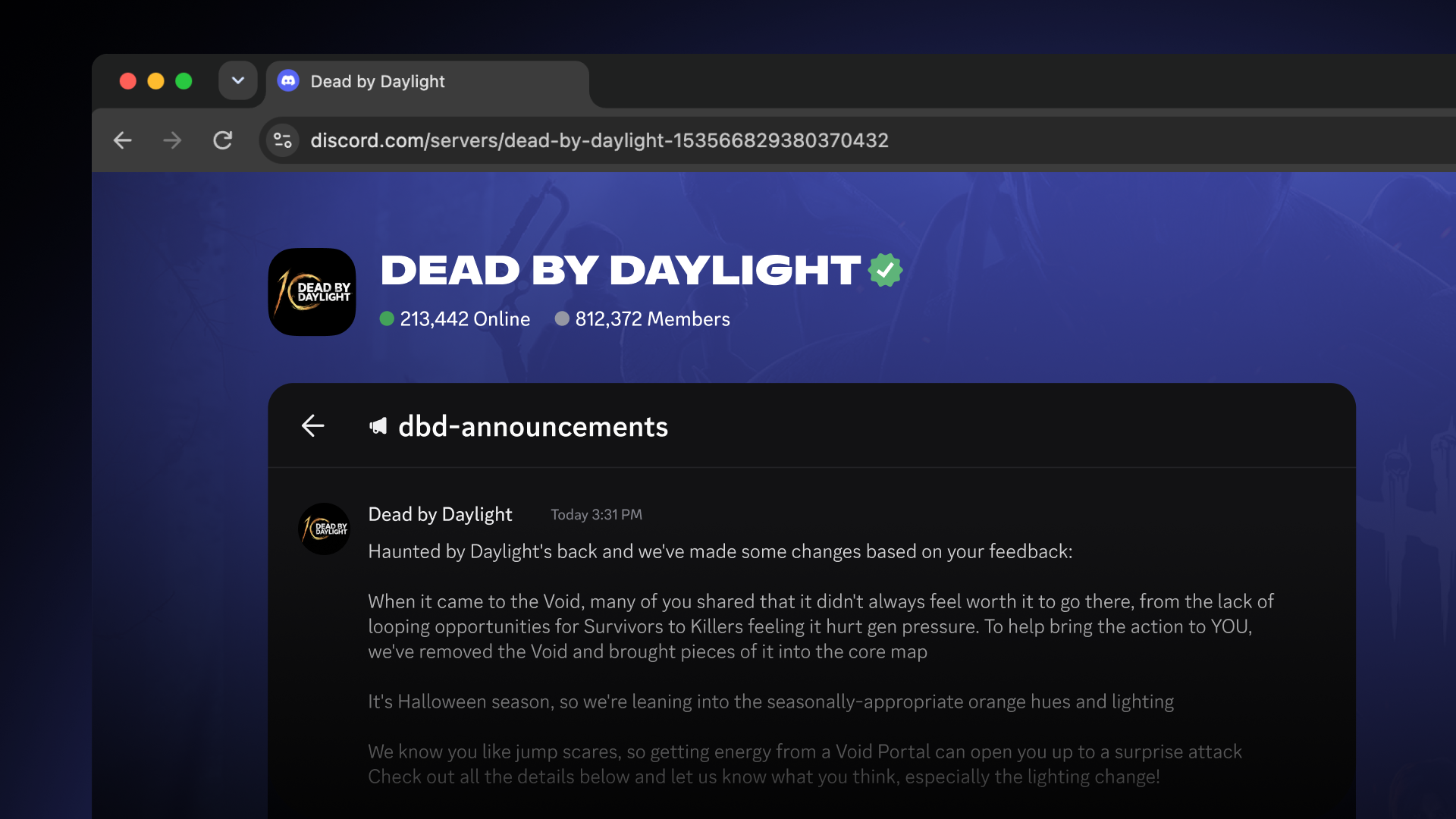
Popular messaging and community platform Discord is introducing a significant policy shift that will make conversations from its largest public servers discoverable in external search engines, including Google. The move marks a departure from the platform’s traditional enclosure, where user chats remained strictly confined within the application’s ecosystem. While the company frames the update as a necessary step to unlock valuable community knowledge for the wider internet, the decision has quickly generated privacy concerns among users who previously assumed their conversations were insulated from broader web indexing.
The policy change specifically targets "Discoverable Servers"—communities featuring at least 1,000 members that are officially listed in Discord’s public directory and do not require a special invitation link to join. Discord hosts a vast array of such communities, encompassing diverse hobbies, professional groups, gaming clans, and financial discussions. According to the platform’s public directory data, there are more than 63,000 total discoverable servers across the entire application, spanning countless niches and interests.
Under the new rollout timeline, the transformation begins on Nov. 16, at which point every Discoverable Server will receive a dedicated web page that may feature automated summaries of public channel discussions. This will be followed in mid-December by the core indexing capability, when individual messages posted in eligible channels will begin appearing directly in web search results, according to an official announcement from Discord. The company clarified that messages posted prior to the official rollout will not be included in the indexing. Furthermore, to protect a degree of personal identity, individual usernames and avatars will be deliberately excluded from the published messages when they appear on external web pages.
Discord defended the adjustment by pointing to a broader cultural shift in how online communities operate. Over recent years, traditional web-based message boards and dedicated forums have increasingly given way to real-time chat platforms like Discord. However, the company acknowledged that this migration has made useful technical answers, troubleshooting tips, and community-driven insights significantly harder for everyday internet users to find through conventional search engines.

"This has led to valuable information being locked in Discord conversations, inaccessible to the wider internet. We want to fix this," the company explained in its official policy communication.
The announcement immediately triggered a polarized reaction across the internet. On discussion forums and community channels, many users expressed sharp criticism over the prospect of their casual chats or specific remarks reaching audiences far outside their intended community context. Critics emphasized that even though these servers are technically public and searchable within Discord itself, participants often maintain a psychological expectation of semi-privacy, assuming their words remain within the conversational flow of the chat application rather than being indexed permanently by Google and other search engines.
Conversely, a segment of the user base welcomed the change, arguing that it addresses a longstanding frustration with modern web search utility. Supporters noted that many niche communities have abandoned legacy forums where troubleshooting steps and specialized advice were easily indexed by search engines. One user participating in Discord’s official announcement thread described the shift as "very much necessary," while another echoed the sentiment that moving communities away from traditional forums had severely hampered the discoverability of collective knowledge.
The policy alteration carries distinct implications for specialized sectors that rely heavily on the platform for real-time coordination, technical discussions, project announcements, and user support. Among the affected spaces are cryptocurrency, decentralized finance, and trading communities, which frequently utilize public Discord servers as primary hubs for project updates and community engagement. A review of Discord’s public directory reveals nearly 800 servers tagged under "cryptocurrency," approximately 1,400 tagged with "trading," and more than 700 categorized under "finance." For these projects, technical troubleshooting and governance discussions that were once insulated within the app will now be visible to anyone querying search engines.
How to opt out
In response to anticipated pushback regarding user privacy, Discord has outlined several mechanisms for individuals and server administrators to opt out of the web indexing initiative. Users who wish to keep their contributions out of search engine results have until the message-sharing rollout begins in mid-December to adjust their account settings.
The company noted that the feature will be disabled by default for users residing in specific regions with stringent data protection frameworks, including Australia, the European Union, the European Economic Area, the United Kingdom, Canada, Brazil, and South Korea. Additionally, accounts registered by teen users will be automatically excluded from the web indexing program.
For users outside of these protected regions who want to prevent their messages from being published, Discord has provided an account-level preference. Individuals can navigate to their User Settings, select the Data and Privacy menu, and switch off the toggle labeled "Show my message content from Discoverable channels on web pages." According to Discord’s official guidance documentation, this single setting covers every Discoverable Server that a user happens to belong to, applying a blanket restriction across all eligible communities.
Users retain the ability to disable the feature after the official launch in mid-December, though this action will only protect messages sent subsequent to the setting change. Individuals who wish to remove previously indexed messages after they have gone live must manually delete the content from Discord. The company has cautioned, however, that external search engines may continue to retain cached copies of those messages for some time even after deletion from the original platform.
Server administrators have also been granted overarching controls to manage their community’s digital footprint. Administrators can prevent messages from individual channels or entire servers from appearing on public web pages and external search results by adjusting their Server Settings under the Web Presence tab. Furthermore, administrators have the option to independently disable the automated discussion summaries that are scheduled to begin rolling out ahead of the full message-indexing phase.