The United Kingdom has launched a major economic strike against Cryptomus, a chameleonic cryptocurrency platform that blockchain intelligence experts identify as a central pipeline for ransomware payments, narcotics trafficking, darknet market transactions, cybercrime services, and illicit financial flows helping Russia bypass international economic sanctions.
Announced on October 8, the U.K. government implemented severe sanctions targeting Cryptomus—which has operated under various aliases including Certa Payments and Xeltox Enterprises—for processing high-volume transactions that directly benefit the Russian state and its financial institutions. Under the terms of the U.K. measures, any financial assets held by Cryptomus within British banking institutions are immediately frozen, and domestic companies are legally barred from conducting any business with the platform, whether through virtual or traditional financial channels. The sweeping sanctions also target several associated virtual payment platforms, including VexPay, TokenSpot, and the Tsunami Payments service.
The coordinated action deals a heavy blow to an infrastructure that has long operated across international jurisdictions while facilitating massive flows of illicit capital. According to insights from blockchain analytics firm Chainalysis, the U.K. sanctions are explicitly designed to dismantle the broader digital architecture supporting Russia’s wartime economy.
In a public assessment released alongside the sanctions announcement, Chainalysis noted that Cryptomus and its evolving network have established themselves as dominant payment hubs for unlawful activity. The firm revealed that these combined services received greater volumes of illicit funds across tracked categories than traditional cryptocurrency mixing services, with the number of associated illicit counterparties surging past 900 in a single month during late 2025.
The scale of the platform’s operations has drawn intense scrutiny from multiple international intelligence and blockchain analysis firms over the past several years. In April 2026, TRM Labs published findings indicating that Cryptomus had processed more than $7 billion in transactions since its inception in 2022. This staggering total included funds tied directly to child sexual abuse material vendors, international terrorist financing networks, and human trafficking rings. TRM Labs also observed that while Cryptomus experienced a temporary cratering in transaction volume after instituting stricter "know your customer" (KYC) compliance rules, the platform quickly adapted by spinning off a parallel, no-KYC payment processing service known as Heleket to maintain its illicit cash flows.

The transition to Heleket followed mounting regulatory pressure from North American authorities. In October 2025, Canada slapped Cryptomus with a record-breaking CAD $176 million fine for severe anti-money laundering violations. However, blockchain investigator and analyst Richard Sanders, who spent months mapping out the platform’s intricate payment infrastructure and transacting directly with its customer base, pointed out a critical limitation in that enforcement action. Sanders emphasized that financial penalties alone are often insufficient to stop determined criminal enterprises.
Writing on LinkedIn, Sanders explained that while fines impose nominal costs, they rarely stop a cryptocurrency payment processor from continuing its day-to-day operations. By contrast, government-issued sanctions carry the legal and operational weight necessary to cripple the entity’s banking and institutional relationships. The distinction, he noted, matters profoundly in the fight against cross-border financial crime.
Investigative reporting previously exposed that Cryptomus originally shared a registered address in Vancouver with dozens of other foreign currency dealers and money transfer businesses—none of which maintained a physical presence at the location. Following the issuance of the massive Canadian fine, Cryptomus appealed the penalty, launched the parallel Heleket platform, and continued processing vast volumes of high-risk transactions.
The U.K. sanctions mark a historic milestone in international regulatory cooperation, representing the first known instance of a "Five Eyes" intelligence-sharing nation—comprising Australia, Canada, New Zealand, the United Kingdom, and the United States—sanctioning a cryptocurrency operation incorporated within the jurisdiction of another member state.
The investigation into Cryptomus and Heleket has also cast a sharp spotlight on the obscure and unconventional methods illicit platforms use to manufacture legal legitimacy. Entities like Cryptomus often derive their operational authority from fictitious financial institutions overseen by phantom regulatory bodies positioned in territories that lack widespread international recognition as sovereign nations.

A detailed investigation into the platform’s corporate history revealed that the sole shareholder of Certa Payments, the parent company of Cryptomus, was a 25-year-old Ukrainian woman. She simultaneously headed several other corporate entities, including the WS Management and Advisory Corporation. This enterprise billed itself as an exclusive regulatory body responsible for overseeing licenses for cryptocurrency, foreign exchange, and online gaming businesses incorporated within the disputed region of northwestern Africa known as Western Sahara.
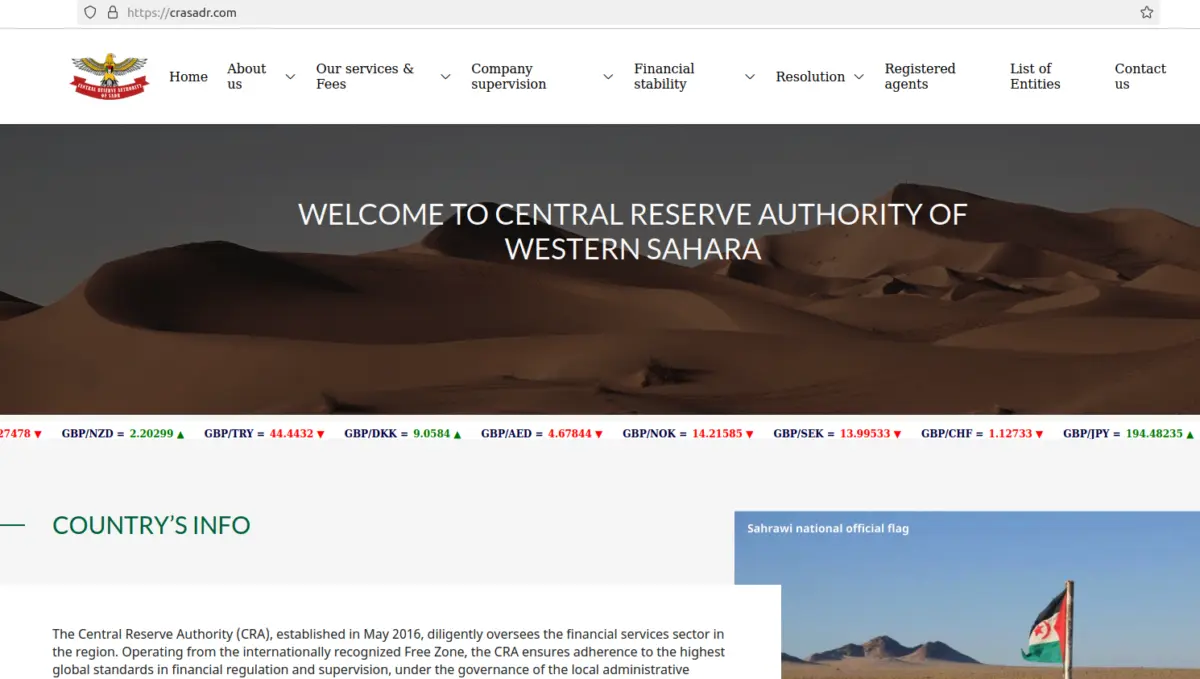
The digital footprint of this regulatory apparatus pointed directly back to the platform’s corporate networks. The registration website for the purported regulatory authority, operating under the domain crasadr.com, advertised services assisting corporate applicants with bank formation, online gaming licenses, and the establishment of foreign exchange brokers. Furthermore, one of Certa Payments’ former web properties shared a server infrastructure with a dozen other domains, including rasd-state.ws, which served as the website for the Central Reserve Authority of Western Sahara.
As international law enforcement and blockchain investigators continue to trace the complex web of shell companies and proxy services supporting the network, the immediate impact of the U.K. sanctions was felt swiftly across digital channels. Shortly after the measures were announced, users attempting to interact with the platform’s automated assistance tools on Telegram were met with sudden system failures, as support bots responded to inquiries by confirming that the platform was abruptly unable to process transactions.