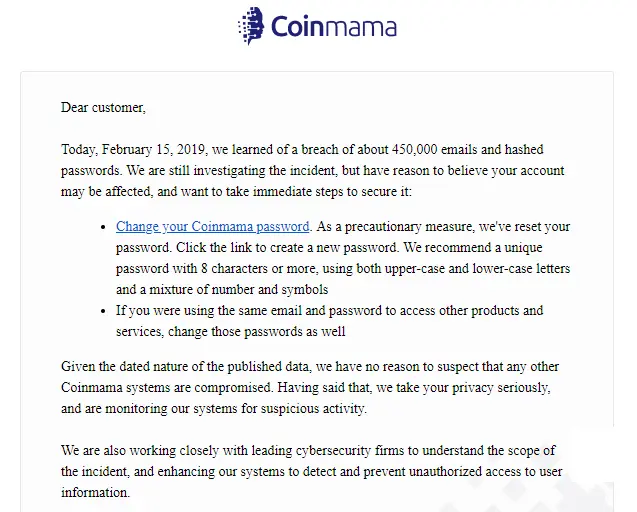
One of the leading cryptocurrency brokerage platforms in the world has fallen victim to a significant cyberattack, underscoring ongoing vulnerabilities within the digital asset exchange ecosystem. Coinmama, a globally recognized platform servicing millions of individuals seeking to buy and sell digital currencies, experienced a major security breach on February 15. The incident resulted in the exposure of sensitive user account details, specifically targeting the email addresses and passwords of more than 450,000 registered accounts.
According to preliminary findings released by the company’s internal security and investigation teams, the wider data breach incident was massive in scale. It involved approximately 24 distinct websites and web properties associated with Coinmama, culminating in the exposure of an astounding 747 million data records globally. Despite the alarming volume of compromised data points across the broader network of affected web entities, Coinmama’s core user base remains relatively contained compared to the total aggregate data footprint. The brokerage currently boasts a robust global community of over 1.3 million registered users who rely on its services to navigate the digital asset marketplace.
The breach has once again cast a harsh spotlight on the cybersecurity measures deployed by digital asset service providers. As the crypto industry continues to mature and attract mainstream attention, centralized exchanges and brokerages remain prime targets for sophisticated threat actors seeking to exploit software vulnerabilities, harvest user credentials, and undermine confidence in decentralized financial networks.
The Discovery and Immediate Response
The swift containment of the incident began moments after the digital intrusion was detected. Platform management and technical response teams sprang into action following the alarming discovery that a comprehensive list containing the compromised email addresses and passwords had been leaked and circulated within dark web forums. The appearance of user credentials in illicit online marketplaces prompted an immediate internal forensic investigation to determine the exact scope of the security failure and to mitigate potential secondary attacks against customer accounts.
Coinmama’s investigating team quickly established that approximately 450,000 individual users had been directly affected by the credential leak. A closer examination of the impacted accounts revealed a specific pattern: the vast majority of the affected individuals were legacy users who had registered and joined the platform prior to August 5, 2017. Newer accounts established after this timeline appeared to have largely evaded exposure, pointing toward a historical vulnerability within older segments of the platform’s database architecture.

Despite the severe nature of the data leak, the platform delivered a reassuring update regarding the financial security of its customers. According to official company statements, no cryptocurrencies were stolen during the course of the cyberattack. Furthermore, comprehensive monitoring and security audits indicated that none of the leaked login information had successfully been utilized by malicious actors to gain unauthorized access to individual user trading accounts or wallets.
In response to the emergency, Coinmama moved swiftly to notify all impacted customers via email and platform alerts. Users were strongly urged to immediately update their login credentials and adopt enhanced security hygiene practices, such as enabling multi-factor authentication, to prevent the leaked information from being weaponized in credential-stuffing attacks. Additionally, corporate leadership pledged to invest heavily in reinforcing the platform’s security infrastructure, conducting comprehensive system-wide audits, and deploying advanced monitoring tools to prevent unauthorized access vectors in the future.
Part of a Broader Wave of Cyber Intrusion
The security incident at Coinmama does not stand as an isolated occurrence within the broader technology and financial sectors. In recent years, numerous prominent online platforms and consumer applications have experienced similar large-scale data compromises. Well-known consumer-facing platforms such as MyFitnessPal and the dating application Coffee Meets Bagel have previously fallen victim to comparable intrusions, highlighting the pervasive nature of sophisticated cyber threats targeting digital databases.
Industry experts have pointed to common technical threads linking these widespread breaches. Speaking to technology publication TechCrunch, Ariel Ainhoren, a researcher from threat intelligence firm IntSights, shed light on the mechanics behind the attacks. According to Ainhoren, the exact same vulnerability has been actively exploited by hackers to infiltrate multiple large-scale corporate databases across the internet.
A critical factor in these systemic breaches involved the widespread utilization of a specific database management software, PostgreSQL. In many of these incidents, the database software harbored vulnerabilities that, once successfully penetrated by an initial system compromise, granted malicious actors the unauthorized capability to download entire databases seamlessly across multiple interconnected websites and operational domains. The ability of attackers to pivot from a single entry point to extract vast repositories of user information underscores the complex technical challenges that organizations face in securing sprawling web architectures against determined cybercriminals.
Tricky Timing and Market Sentiment
The timing of the Coinmama security breach could hardly have been worse for the broader cryptocurrency industry. The incident unfolded just as public reports were circulating regarding another major crisis involving a prominent crypto exchange, QuadrigaCX. In that separate debacle, QuadrigaCX lost control of millions of dollars in customer funds stored securely in offline cold wallets following the sudden passing of its founder, leaving users unable to access or recover their digital assets.

Incidents of this magnitude, occurring in rapid succession, inevitably exact a heavy toll on public perception. Investor confidence in the security and reliability of cryptocurrency markets—and centralized exchanges in particular—has faced mounting pressure. For an industry striving for global legitimacy and widespread financial adoption, news of massive data leaks and inaccessible customer funds represents a formidable public relations hurdle that trading platforms and brokerages are eager to avoid.
These consecutive failures have amplified a growing chorus of criticism directed at the operational and security management systems employed by various cryptocurrency exchanges. Critics argue that despite handling substantial sums of capital and sensitive personal information, certain platforms have historically lagged behind traditional financial institutions in implementing rigorous, institutional-grade cybersecurity frameworks. Consequently, a prevailing sentiment has emerged suggesting that existing protocols are frequently insufficient to adequately protect users’ digital assets and personal privacy.
At the same time, industry analysts emphasize that these high-profile failures do not necessarily represent the entire crypto exchange landscape. Many of the industry’s largest and most dominant trading platforms—including major global players like Binance, Coinbase, and Gemini—have established rigorous, high-standard security paradigms. These industry leaders have invested heavily in advanced cryptographic defenses, routine third-party security audits, and comprehensive insurance funds, successfully maintaining immaculate security records without experiencing a single major hack since entering the digital asset sector.
As the digital currency ecosystem continues to evolve past its formative years, the Coinmama breach serves as a stark reminder of the persistent threats facing online brokerages. The incident highlights the critical imperative for continuous technological vigilance, proactive vulnerability patching, and the elevation of cybersecurity standards across the entire financial technology landscape to protect users and preserve trust in the future of digital finance.