
Financial institutions are increasingly shifting their long-term focus toward an onchain future, driven by tokenization initiatives that unlock new market access and deliver structural efficiencies compared to traditional investment products. According to Matthew Horne, head of digital asset strategists at Fidelity Investments, this transition has crossed a definitive threshold where legacy participants view the migration as a permanent evolutionary step for global markets.
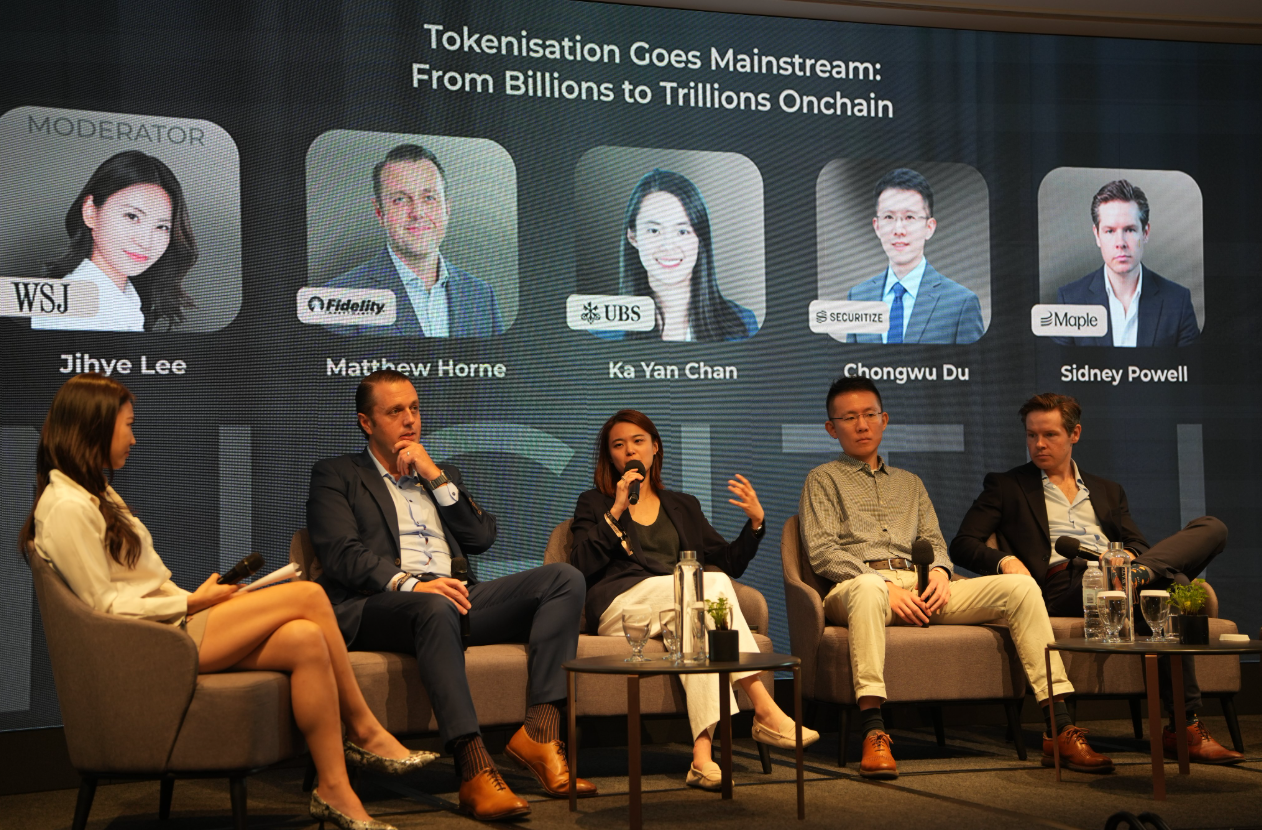
Speaking during a panel discussion at the Longitude conference in Singapore on Thursday, Horne emphasized the depth of institutional commitment observed over the past year and a half. "In the last 18 months, if you look at the push by true institutions to move toward an onchain future, it’s really no going back," Horne stated to industry attendees.
For major US asset managers, the primary motivation behind moving traditional instruments onchain lies in the promise of enhanced investor accessibility and the capacity to tap into previously fragmented or unreachable global liquidity pools. Tokenization effectively removes traditional operational frictions, allowing firms to streamline issuance, settlement, and lifecycle management while extending the reach of their products to a broader demographic of investors.
Market metrics underscore this accelerating institutional adoption. Demand for tokenized assets surged by 41% over a recent 30-day window, with the total number of unique holders surpassing 493,000 addresses, according to data from RWA.xyz. This metric specifically measures blockchain addresses holding tokenized real-world assets (RWAs), excluding standalone stablecoins to provide a clearer picture of growth within productive asset classes.

The panel discussion in Singapore featured a diverse array of industry leaders, including Jihye Lee of the Wall Street Journal, Matthew Horne of Fidelity, Ka Yan Chan of UBS, Chongwu Du of Securitize, and Sidney Powell of Maple. Their dialogue mapped out the changing landscape of institutional finance, where blockchain rails are increasingly viewed not as experimental technology, but as essential infrastructure for the next generation of capital markets.
Treasuries and Equities May Bring Billions Onchain With More US Tokenization Adoption
While alternative and niche assets served as early entry points for onchain experimentation, market participants agree that the true transformation of the financial system will occur when foundational portfolio staples—such as US Treasuries and equities—are comprehensively integrated onto distributed ledgers. Ka Yan Chan, head of digital assets business development at UBS, noted that incorporating these core asset classes could inject billions of dollars into onchain ecosystems.
However, scaling from billions to trillions in total value locked will require fundamental shifts at the core of the global financial architecture. "What would really drive the billions to the trillions is when market infrastructure players like the Fed or DTCC make the first move in transforming the custody layer to a tokenized platform," Chan explained during the panel.
Until central banks and major clearinghouses modernize their underlying systems, commercial market participants can build ancillary distribution networks. Chan suggested that industry players are well-positioned to "piggyback" on these systemic initiatives by constructing the user-facing distribution and liquidity layers required for tokenized assets to circulate efficiently among institutional and retail portfolios alike.
Regulatory developments in the United States are already beginning to clear the path for such structural transformations. In December 2025, the Securities and Exchange Commission issued a crucial "no-action" letter to a subsidiary of the Depository Trust and Clearing Corporation (DTCC), granting it the greenlight to offer a novel securities market tokenization service. This regulatory nod provides institutional custodians with the clarity needed to begin integrating blockchain solutions into mainstream clearing and settlement operations.
Further signaling regulatory evolution, the SEC approved a temporary exemption in September allowing for the limited trading of tokenized US stocks on designated onchain venues. Capitalizing on this regulatory opening, Securitize announced earlier on Thursday the official launch of trading for tokenized shares representing a dozen of the most widely held US equities, complete with proper security entitlements.
These regulatory milestones have catalyzed significant capital inflows into the ecosystem. Data from OnchainBenchmark indicates that more than $1.2 billion in fresh capital has migrated onchain over a recent 30-day period, pushing the combined capitalization across stablecoins and tokenized assets past $323 billion.
Looking further ahead, major banking institutions anticipate exponential growth for the sector. Geoff Kendrick, global head of digital asset research at Standard Chartered, projected in August that the tokenized real-world asset market could expand to reach $4 trillion by the end of 2028, driven by ongoing institutional migration and favorable regulatory adjustments across key global jurisdictions.